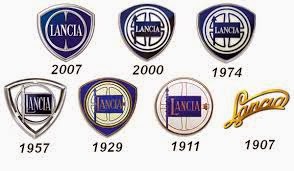
Logo 1907

Logo 1907
Se afișează postările cu eticheta Alfa Romeo. Afișați toate postările

vineri, 6 august 2021

Stellantis Announces They Will Be Forming Their Own Design Studio


Stellantis has announced the formation of the new Stellantis Design Studio, a creative agency that will provide design services for companies dealing with everything from transportation, to industrial, to manufacturing, and more.

The new studio looks to build on the current Peugeot Design Lab’s nine years of experience and over 120 collaborations, as well as expand its expertise to the rest of Stellantis’ brands, such as Maserati, Jeep, DS Automobiles, and Lancia. It will be led by Klaus Busse and Arnault Gournac, both of whom have already had experience serving significant roles within the company.

 Klaus Busse currently oversees Maserati and Jeep Europe, and as of now, he will also be taking on the role of Head of Design at the new Stellantis Design Studio. His job will also entail leading the Studio’s expansion out to its respective brands. Regarding the founding of the Studio and his new position, he said: “The success story and expertise of Peugeot Design Lab is unrivaled. The extension of this know-how to all of our brands opens up incomparable perspectives.”

Arnault Gournac is the director of both the Peugeot Design Lab as well as Cycles Peugeot, and, along with Busse, has helped lead the new Design Studio in its global expansion. “Looking back on our brand portfolio, Stellantis designers have created some of the most exciting and visually appealing vehicles in automotive history,” said Gournac. “We plan to take that creative energy and offer our key competencies to our global external partners to help them take their brand and design projects to the next level. We will work to expand our reach by fostering new partnerships with global clients from all horizons.”

The Peugeot Design Lab will still operate alongside the Stellantis Design Studio, with a key role being to address Peugeot’s projects undertaken beyond the automotive sector. As time goes on, Stellantis Design Studio plans to progressively incorporate this knowledge and apply it to the rest of its brands.

https://www.carscoops.com/2021/07/stellantis-forms-their-own-design-studio/


Mărcile Lancia şi Alfa Romeo vor deveni complet electrice în 2026 şi 2027


Grupul Stellantis anunţă că marca Lancia va deveni 100% electrică în 2026 la nivel global iar marca Alfa Romeo va face acelaşi lucru în 2027 pe principalele sale pieţe.

Automobilele marca Alfa Romeo vor fi complet electrice în Europa, America de Nord şi China, a precizat conducerea grupului Stellantis cu prilejul publicării rezultatelor sale semestriale. Stellantis anunțase anterior că Alfa Romeo va începe transformarea într-o marcă electrică din 2024. 

Grupul auto a mai anunţat de asemenea că pregăteşte relansarea mărcii Lancia, care în prezent nu mai oferă decât un singur model şi acesta doar în Italia.

Marca premium DS din portofoliul grupului Stellantis va mai lansa doar vehicule electrice începând din 2024.

Stellantis intenţionează ca în doi ani să dubleze numărul de automobile complet electrice din gama sa, de la 11 la 22 de modele, a subliniat CEO-ul Carlos Tavares.

Via Agerpres


https://www.automarket.ro/stiri/marcile-lancia-si-alfa-romeo-vor-deveni-complet-electrice-in-2026-si-2027-105047.html


miercuri, 25 martie 2020

FCA dealers always at the customer’s side: “Parked at home, but always on the move!”

FCA dealers always at the customer’s side: “Parked at home, but always on the move!” 


  • Potential customers can now contact official FCA dealers, without leaving their house, by using Google Hangouts Meet.
  • FCA Bank is using advanced digital tools to provide quotes for financing and insurance services.
  • All car and commercial vehicle purchases financed through FCA Bank will have first payment installment deferred until January 2021: a tangible advantage at a difficult moment, providing customers peace-of-mind with their vehicle purchase.
  • Italy is the first market where FCA is using this “remote” contact technology which, given its ease of use, will be extended to other markets.
  • Through these initiatives, FCA is working to consolidate the long-standing relationship of trust and professionalism with its customers and support those planning to make a car purchase, through special conditions at this difficult time for everyone.

At an extraordinarily difficult moment, FCA is implementing concrete new initiatives via its dealer network to support all citizens who, during this national health crisis, are considering the purchase of a new vehicle and want to get in touch with an FCA sales consultant.

We have launched a dedicated service to enable dealers and customers to communicate without anyone having to leave home: an innovative quotation process that allows sales negotiations to be carried out online, rather than in the showroom. Sales personnel have had special training and are ready to help customers configure a new vehicle, prepare a quote and present financing options. Customers can request an appointment by phone or email and they will receive a link to connect directly with a sales consultant. No software installation is required. Italy is the pilot market for this FCA project which, given the easy-to-use technology, will be extended to other countries.

The technology is the Google Hangouts Meet app, an intuitive tool for online communications, with the ability to view files and images and make video calls. This means customers considering a purchase can have the same direct personal contact with their trusted FCA dealer. Transactions will subsequently need to be completed in person as soon as circumstances allow and in accordance with government directives.

The initiative will be promoted via a digital campaign using the slogan “Parked at home, but always on the move!” to highlight the importance of rigorously observing the requirement to stay at home, while remaining proactive and looking optimistically to the future. The simple, easy-to-use system also provides concrete support for the Italian industrial system with the orders generated contributing to a faster return to normal once the crisis is over.

Finally, as further support at this extremely difficult time, the first payment installment on all car and commercial vehicle purchases financed through FCA Bank will be deferred until January 2021.
Now more than ever before, knowing how to wait is the best way to get going again.

Turin, March 25, 2020

sâmbătă, 19 octombrie 2019

Lancia supraviețuiește cu un singur model în gamă: în primele 9 luni, a vândut mai mult în Italia decât Alfa Romeo în toată Europa

Lancia supraviețuiește cu un singur model în gamă: în primele 9 luni, a vândut mai mult în Italia decât Alfa Romeo în toată Europa


https://www.automarket.ro/stiri/lancia-supravietuieste-cu-un-singur-model-in-gama-in-primele-9-luni-a-94241.html


Lancia, brandul “abandonat” de grupul Fiat-Chrysler, a reușit să vândă peste 45.000 de mașini în primele 9 luni, doar pe piața din Italia, depășind vânzările totale Alfa Romeo în Europa. Cu un singur model în gamă, Ypsilon, Lancia a dispărut însă din planurile de viitor ale grupului italian.

În 2019 se împlinesc 50 de ani de când brandul Lancia a fost cumpărat de Fiat, dar grupul italian nu a programat vreo sărbătoare pentru a marca acest moment.

După o încercare eșuată de relansare, Lancia a ieșit din vederile conducătorilor grupului FCA. “Ne-am dat seama că Lancia nu atrage clienții din afara Italiei,” spunea, în 2014, Sergio Marchionne, fostul șef al grupului.

Cu toate acestea, Lancia reușește să “supraviețuiască” având un singur model în gamă, respectiv Ypsilon, și Italia ca singura piață de desfacere.

În primele 9 luni din 2019, Lancia a reușit să vândă 45.783 de unități în Italia, cu o creștere de 29%, mai mult decât a vândut Alfa Romeo în toată Europa (39.114 de exemplare).

Analiștii estimează că Lancia Ypsilon va rămâne încă cel puțin doi ani pe piață, iar în 2020 urmează să primească o versiune mild-hybrid.

Via Automotive News

sâmbătă, 12 octombrie 2019

Watch Out, Alfa: Lancia Launches Ypsilon Monogram Edition In Italy

Watch Out, Alfa: Lancia Launches Ypsilon Monogram Edition In Italy

https://www.carscoops.com/2019/10/watch-out-alfa-lancia-launches-ypsilon-monogram-edition-in-italy/

Earlier this year, everyone who knows a thing or two about cars was stunned to learn that Lancia outsold Alfa Romeo in the European Union in the first six months of 2019.


Yes, a brand reduced to a single market (Italy) and a single eight-year-old model (Ypsilon) sold more units in Europe than the Alfa Romeo brand in which parent company FCA poured massive amounts of money to turn it into a credible rival for Germany’s big three premium carmakers.

Now, we don’t know whether Lancia will end the 2019 calendar year ahead of Alfa Romeo in Europe or not, but the maker of the Giulia and Stelvio should be worried. The reason (and we’re not even joking) is that Lancia has launched a new Ypsilon special edition model called Monogram, which should help further boost sales in Italy.


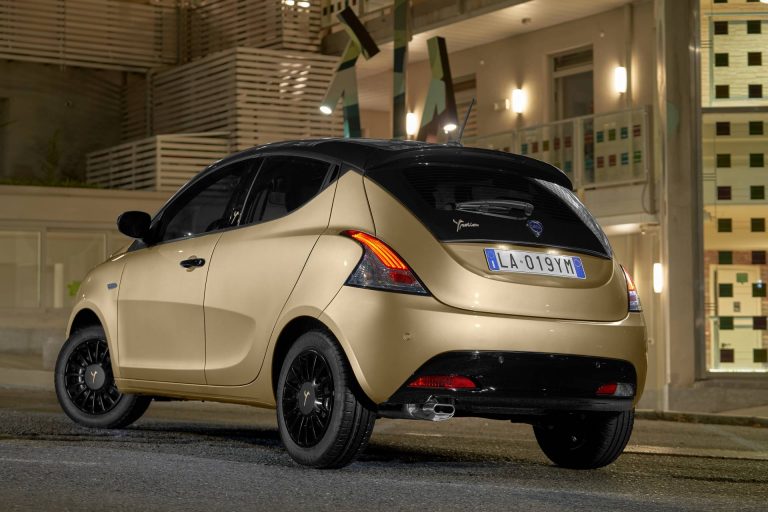
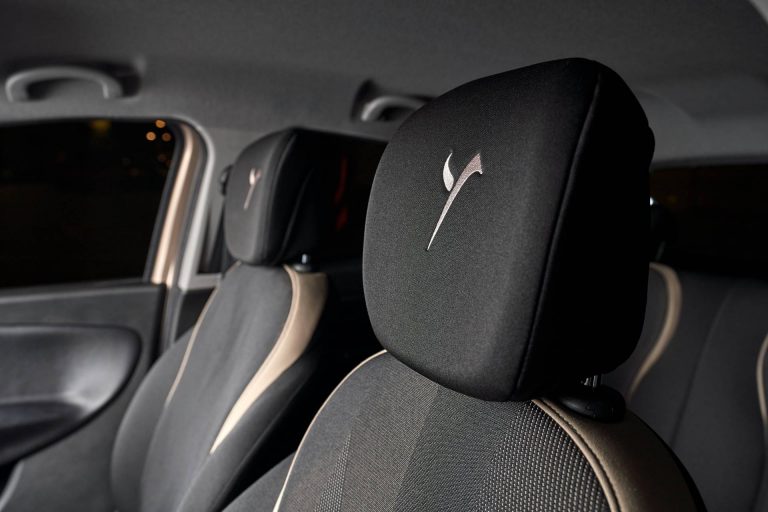
The umpteenth special edition Lancia Ypsilon takes its name from the letter “Y” which has been turned into a monogram featured everywhere on the car. Offered in an exclusive color combination of light gold and black, the Ypsilon Monogram introduces the letter “Y” as a graphic sign representing the car’s signature. The monogram can be seen on the alloy wheel centers, B-pillars, and rear screen, as well as on the headrests.

Other unique features include the A-pillars which gradually change color from black to light gold as they join the bonnet, plus gloss black trim – including inserts on the upper and lower grilles, door handles, alloys, mirror caps, and rear bumper.


Inside, the Ypsilon Monogram gets new fabric upholstery with light gold leather accents and stitching. The special edition model also brings upgraded standard equipment including a DAB audio system, Uconnect infotainment system with 5-inch touchscreen, air conditioning, leather steering wheel, power-adjustable side mirrors, rear parking sensors, and fog lights.

The engine lineup stays the same and includes a naturally aspirated 1.2-liter Fire Evo II gasoline engine rated at 69 PS (68 HP) and available in a bi-fuel setup (gasoline and LPG), as well as an 80 PS (79 HP) 0.9-liter TwinAir turbocharged two-cylinder engine running on CNG (compressed natural gas) and gasoline. 


vineri, 15 februarie 2019

FCA reverses Lancia strategy - brand survives

FCA reverses Lancia strategy - brand survives

Remember how Fiat Chrysler told the media and analysts that Lancia would fade away during 2018? Well, it didn't disappear. And, an eight-year model is still outselling the Alfa Romeo range in Italy. What's going on?

Pressed for a clear statement, a spokeswoman for Lancia told just-auto earlier on 12 February that "It will survive as a brand but it will sell just one model: Ypsilon". Asked when exactly production is scheduled to end, there was this answer: "We will produce and sell it for the domestic market". As for the potential of adding one or more new models, "Lancia's focused on Ypsilon". Hard then to obtain a true picture.

Never mind the future, an air of uncertainty about the here and now clearly hangs over certain parts of the FCA business. By way of contrast to the uncertainty of where FCA Italy finds itself only six weeks into a new year, what we once called Chrysler is way too busy to be vexed by existential anxiety. Busy trying to milk the good times for as long as cheap gasoline, corporate tax cuts and low interest rate vehicle leases/loans continue.

Muscle cars and trucks powering profits

The US-based side of things is pulling in supersized profits and new or updated models are being churned out regularly. Which sounds a lot like the former Chrysler Corporation in the pre 'merger of equals' days. Even the ancient Dodge muscle cars are going gangbusters, much to the annoyance of Ford and GM which sell way more modern and therefore supposedly more appealing alternatives. The eleven years young Challenger is merrily laying rubber all over the Mustang and Camaro's driveways, while the Charger, its development and all other fixed costs long ago repaid, must be almost as extravagantly profitable. GM says it can't make money from a factory in Ontario so Oshawa is to be closed. Chrysler can't seem to make people stop people lining up to purchase the vehicles it builds in two (allegedly high cost, or so some say) Ontario plants.
Then there is Ram, which must make the likes of Volkswagen and BMW wonder why on earth they bother with the supposed prestige of having a high-end make such as Bentley or Rolls-Royce: neither makes anywhere remotely near the margins of the pick-up truck brand.

Forget Fiat? Kill Chrysler? Not so fast...

The quip about FCA being a company which, if it wants to really see its share price soar, ought to ditch the brands which denote the first two letters of its name, is flippant. Even if there is some truth in it. Chrysler is in fact doing well enough thanks to the 300 and Pacifica both being in demand. As for Fiat, well that's another story.

The US-based brands and their model ranges - current and next generation - will be discussed in more detail soon enough, as will Alfa Romeo, Maserati and Ferrari (click here for an analysis of another brand, Abarth). First though, back to FCA Italy and the lack of public statements about what is going on with a once luxury, then rally-sports marque, which was supposed to have been deceased by now. Lancia doesn't seem to want to die just yet.

Does Mike Manley see a future for Lancia?

Mike Manley, keen not to be a mere continuity man, will have had a good look at the equity in this historic marque. And also, at the costs of killing it. Might be have told his boss John Elkann and the board of FCA that it should be saved? Possibly not. Why then is the little Ypsilon, the brand's only car, still being made? And why did FCA build more than 48,000 units of this outmoded city car in 2018? And why were sales up by 55% in January? Lancia's spokeswoman attributes the recent success to a promotional campaign (see image).

Back in May 2014, FCA announced future models plans for all of its brands. That was when we officially learned that Lancia was to be wound down, the last model in its eventual final market due to flame out during 2018.

Sure enough, Lancia was withdrawn from the few countries where it was still going, various rebadged Chryslers were discontinued, and the Ypsilon, in Italy, became the last man standing. What now then? The brand climbed back up the sales charts last month, charming its way into the top ten with deliveries of 6,606 cars, after ending 2018 in sixteenth place. And guess which brand was hustled aside as Lancia landed back in the top ten? Ironically, FCA Italy's star performer of 2018, Jeep: sales dropped by 16% to 6,249 vehicles.

If you look at the media website for Lancia, the most recent press release concerns an historic cars event which took place in November 2016. The information issued prior to this one is dated 27 August 2016. There are then just two others prior to this bulletin which itself concerns FCA's brands' response to the tragedy of the Italian earthquake, and these are concerned with an historic race and an expo in Milan. Only then do you see the most recent announcement on new product for Lancia. Dated 15 September 2015 (an overview of a minor update for the Ypsilon). How extraordinary that the car, and the brand, even survive, let alone, as is so clearly happening of late, thriving. The brand's Twitter feed is way more active, at least. And that's very interesting: if Lancia is doomed, why is there a constant stream of information about the Ypsilon?

One car. One market. And STILL it outsells Lexus Europe.

It's more than two years since a similar look at what FCA's intentions for this division may or may not be. The striking thing is how little has changed. Much money has been poured into Alfa Romeo. The results have been somewhat less than remarkable. Lancia has had a gentle decline while Alfa has risen, but not too steeply. It is an extraordinary thing to report that the one-model and one-country make was more successful than Lexus across all of ACEA-defined Europe in 2018: 48,854 (-19.8%) compared to 46,695 (+2.6%). Imagine what could happen if FCA gave Lancia even one new vehicle. 

Could it happen?

As was pointed out when I last pontificated on this brand in December 2016, there are multiple low-cost ways of saving Lancia and seeing it thrive. Will this be the final time that just-auto reports on the state of the blue shield badge marque? It's hard to say.

Reports for many other manufacturers' future models are grouped in the OEM product strategy summaries section of just-auto.com.

Future product program intelligence

More detail on past, current and forthcoming models can be found in PLDB, the future vehicles database which is part of QUBE.

Fiat was the first, then came Abarth and now this one is the third feature in a series covering current and future passenger vehicles made by Fiat Chrysler Automobiles. Others to come will focus on Alfa Romeo, Ferrari, Maserati, Chrysler, Dodge, Jeep, and finally, Ram.

https://www.just-auto.com/analysis/fca-reverses-lancia-strategy-brand-survives_id186960.aspx?fbclid=IwAR3t5KJz0_HczCuCybhRpOgnd3AKdqHiWs1oHe_o_qNrgh5B4gprIQlABFE


joi, 26 iulie 2018

Blestemele fanilor LANCIA l-au ajuns! RIP Sergio

Doliu în industria auto: Sergio Marchionne a încetat din viață la 66 de ani


Sergio Marchionne, fostul CEO al Alianței Fiat-Chrysler, a încetat din viață la 66 de ani în urma unor complicații apărute după o operație suferită recent la umăr.

Industria auto este în doliu. Sergio Marchionne, unul dintre cei mai importanți manageri din istorie, care se identifică cu mărci globale de renume precum Fiat, Ferrari, Alfa Romeo, Maserati, Lancia sau Chrysler, a încetat din viață miercuri în urma unor grave probleme de sănătate.
Anunțul a fost făcut de John Elkann, președintele Alianței Fiat-Chrysler, în cadrul unui scurt comunicat de presă.

"Am aflat cu adâncă tristețe de trecerea în neființă a lui Sergio Marchionne. Din păcate, de ceea ce ne-a fost frică nu am scăpat. Sergio Marchionne, om și prieten, a dispărut. Cred că cea mai bună metodă pentru a-i onora amintirea este să construim pe baza moștenirii pe care ne-a lăsat-o, să continuăm să dezvoltăm valorile umane, responsabilitatea și deschiderea cu ajutorul cărora a fost un campion înflăcărat", este mesajul publicat de Elkann.

Vestea a venit la numai câteva zile după ce Alianța Fiat-Chrysler a anunțat că Marchionne este internat în stare gravă într-un spital din Elveția, motiv pentru care atribuțiile sale au fost preluate cu efect imediat de Mike Manley, fostul șef al Jeep.

Informații neoficiale despre situația medicală

Constructorul a evitat să detalieze starea de sănătate a italianului, însă publicația italiană Lettera43, recunoscută pentru sursele sale de încredere, a anunțase cu numai câteva ore în urmă o serie de amănunte. Astfel, Marchionne a fost diagnosticat "cu mult timp în urmă" cu o tumoare malignă la unul dintre umeri, iar din acest motiv se deplasa cu dificultate. 

El se trata cu cortizon și lua medicamente și pentru tratarea unei tiroidite cronice. În plus, italianul și-a exprimat o serie de dubii cu privire la o procedură medicală pentru îndepărtarea tumorii maligne.
Totuși, el a fost operat la umăr, iar în timpul operațiunii a suferit un embolism cerebral, caracterizat de astuparea unui vas sangvin în urma unei coagulări de sânge în creier. În urma acestei complicații, Marchionne a intrat în comă și a fost menținut în viață cu ajutorul aparatelor, în timp ce medicii amenționaseră că nu există nicio speranță de recuperare.

Niciuna dintre aceste informații cu privire la starea de sănătate a lui Marchionne nu a fost confirmată oficial de Fiat-Chrysler.

Cariera lui Marchionne in industria auto

Marchionnne a fost ales ca membru independent în consiliul director al Fiat SpA in 2003, iar dupa numai un an a ajuns în funcţia de director executiv. Atunci când a preluat cârma companiei italiene, Fiat plutea în derivă.

Cu pierderi de aproximativ 6 miliarde de euro între 2001 şi 2003, producătorul italian era pe punctul de a se scufunda în ceea ce ar fi fost, la acea vreme, cel mai răsunător faliment al începutului de mileniu. Marchionne a reuşit să pună ordine în vistieria italienilor şi să cârpească datoriile cu două miliarde de dolari, oferiţi de General Motors ca o compensaţie pentru un joint-venture eşuat. Aşa se face că la numai un an după ce a preluat compania, Marchionne a adus Fiat pe profit.

In 2014, la 10 ani de la instalarea sa pe cea mai înaltă poziţie de conducere a Grupului Fiat, Marchionne marca încă o victorie răsunătoare: gigantul Chrysler, al treilea constructor auto din Statele Unite, a devenit subsidiarul mai modestului Grup Fiat.

În ultimii ani, Marchionne a fost aspru criticat pentru strategiile sale din fruntea Fiat-Chrysler, în special din cauza situației precare și a vânzărilor reduse din dreptul unor mărci celebre precum Lancia, Alfa Romeo sau Maserati. În plus, Alianța a înregistrat o perioadă nefastă inclusiv în privința brandului Fiat, iar Marchionne stabilise deja o restructurare radicală a gamei de modele Fiat din Europa, care va rămâne doar cu 500 și Panda, urmând ca Punto și Tipo să fie eliminate.

De asemenea, Marchionne a fost criticat că a reacționat greu la două dintre cele mai importante trenduri recente din industria auto: dezvoltarea sistemelor cu funcții autonome și introducerea tehnologiilor hibride și a mașinilor electrice.

În acest context, Marchionne a încercat în mai multe rânduri să găsească un partener pentru o fuziune, iar una dintre țintele sale a fost Grupul Volkswagen. Cel mai recent, presa internațională a speculat insistent că Hyundai intenționează să cumpere Fiat-Chrysler.

Întreaga strategie a Alianței s-ar putea schimba însă după decesul său, atât în privința tehnologiilor dezvoltate și a mărcilor și modelelor, cât și a prezenței Ferrari în Formula 1.

Citește aici un amplu articol despre viața și cariera lui Marchionne.

Via Fiat-Chrysler, Automotive News, Lettera43

http://www.automarket.ro/stiri/doliu-in-industria-auto-sergio-marchionne-a-incetat-din-viata-la-66-de-ani-85861.html


luni, 14 noiembrie 2016

AlfaFest 2016 – Maramureșul a găzduit familia AlfaClub cu brațele deschise

După 10 ani în care alfiștii au cucerit, cu pasiunea lor pentru constructorul italian, unele dintre cele mai frumoase orașe ale țării – Sibiu, Brașov, Suceava, Sighișoara sau Tulcea -, anul acesta gazda festivalului Alfa Fest 2016 a fost uimitorul Maramureș.

Cea de-a 11-a ediție s-a desfășurat în perioada 17-20 iunie la Vișeul de Sus și a adunat posesori și pasionați de Alfa Romeo din toate colțurile țării, dar și oaspeți din străinătate.

AlfaFest01

Aproximativ 50 de reprezentante ale mărcii, de la un Spider ce marca sfârșitul anilor ’70 și până la unele dintre cele mai recente modele Alfa Romeo, MiTo și Giulietta, au acceptat propunerea organizatorilor de a duce tradiția mai departe.
Și pentru că vorbim de tradiție, iar „lemnul” și “apa” sunt două cuvinte care definesc cel mai bine istoria și viața maramureșenilor, participanții au fost invitați la o calatorie în timp, atât de specifică locului.
Pentru o zi, alfiștii și-au lăsat mașinile în parcare și au pornit la drum pe valea Vaserului, care traversează munții Maramureșului, în mijlocul unuia dintre cele mai frumoase și mai salbatice peisaje din România. O experiență frumoasă, cu bătrâna Mocănița, un tren cu aburi construit după Primul Război Mondial, ce merge pe una dintre ultimele șine de cale ferată pentru locomotivele cu aburi încă activă din Europa.


AlfaFest07
AlfaFest08

................

Articol integral pe =>  http://flawless.ro/alfafest-2016-maramuresul-gazduit-familia-alfaclub-cu-bratele-deschise/

https://www.facebook.com/simplyflawless.ro


duminică, 28 august 2016

FCA in support of Italy’s earthquake-hit territories


FCA, FCA Bank and Leasys give concrete expression of their solidarity and their closeness to the communities affected by the earthquakes which have hit Central Italy.

In order to provide support for people who have been struck by this disaster, FCA is participating in fund-raising activities carried out by the Italian Red Cross, which is in the front line of emergency assistance operations. The FCA Group is committed to integrating the sums of money donated by its employees to this humanitarian initiative.

As well as this, the Group is making a fleet of vehicles available to institutions involved in emergency operations in the areas affected. These consist of commercial vehicles vital for logistical and operative needs.

Among the numerous company initiatives launched is the suspension of payment of instalments and fees for contract financing, leasing and hire signed by inhabitants of the areas hit by the earthquakes. On top of this, FCA and FCA Bank are making available a solidarity programme for those in the area whose cars or vehicles have been damaged or destroyed, offering those who wish to purchase a new Group vehicle zero-advance contracts with zero interest for five years, in addition to all other promotional offers.

And finally, Mopar, the FCA brand for services, Customer Care, original spare parts and accessories for FCA brands, offers all residents of the affected areas a reduction on spare parts used to repair vehicles damaged by the earthquakes, up to a cost of €1500.

These company initiatives confirm its commitment, in terms of humanitarian, technical and economic aid to the population struck by this tragedy.
Call the Group's toll-free "green" telephone numbers in order to contact the call center in order to obtain further information.


Turin, 27 August 2016


duminică, 5 iunie 2016

RSS AUTOMOBILE - service auto , magazin piese auto IASI


SC RSS AUTOMOBILE SRL
Iasi, Romania
C.U.I. 32717977
J22/141/2014

Magazin 1 – B-dul Alexandru cel Bun, Nr. 4
Telefon: 0729.049.352
E-mail: contact@rss-automobile.ro

Program:
Luni-Vineri: 09:00 - 18:00
Sambata: 09:00-14:00
Duminica: Inchis


Service – Str. Rampei, Nr. 18-20 a, Cartier Dacia
Telefon: 0729.049.351; 0729.049.350; 0232.250.550
E-mail: contact@rss-automobile.ro

Program:
Luni-Vineri: 09:00 - 18:00
Sambata: 09:00-14:00
Duminica: Inchis

LIKE => https://www.facebook.com/rssautomobile.ro/ salut'


http://rss-automobile.ro/index.php
   :D


Service:

Inaugurata destul de recent, in luna mai 2007, activitatea de service cunoaste o evolutie rapida, sustinuta de seriozitate, profesionalism, experienta in domeniu si nu in ultimul rand, de echipamentele aflate in dotare.

Astazi, ne mandrim cu un service autorizat de R.A.R., pentru marcile VW, AUDI, SEAT, SKODA, DAEWOO, RENAULT, DACIA, FORD si OPEL., lista ce va fi completata cat de curand cu marcile MERCEDES, FIAT si BMW.

RSS utilizeaza scule si dispozitive speciale de la producatori cu renume in domeniu, USAG, PASTORINO, DRAPER, BOSCH, TEHNOTEST, asigurand astfel lucrari promte si de calitate.

Servicii oferite:

    Mecanica
    Testare compresie
    Diagnoza computerizata / osciloscop
    Reconditionari cardane
    Reconditionari turbosuflante

Quick service

Pentru lucrarile de mica si medie amploare, avem întotdeauna un post de lucru liber. Schimbul de placute, al uleiului si filtrelor, tobelor, elementelor de directie, amortizoarelor, se poate efectua pe loc.

Rapiditatea lucrarilor este asigurata de stocul mare de piese disponibil in magazinele noastre, iar piesele ce nu se afla in stoc se livreaza intr-un timp foarte scurt.

Service rapid, fara programare, 6 zile din 7.
RSS Assist


O noutate in gama serviciilor RSS, asistenta rutiera, ce vine in ajutorul clientilor ce nu se pot deplasa la sediul firmei noastre.

Serviciul include, dupa caz, asistenta mecanica la fata locului, diagnoza computerizata portabila, transportul gratuit al ocupantilor autoturismului pana la service si tractarea autoturismului, daca sunt necesare reparatii suplimentare sau reparatia nu se poate efectua pe loc.


joi, 5 mai 2016

FCA takes part in the 100th edition of the legendary "Targa Florio"

The Fiat, Alfa Romeo and Abarth brands will take part in the prestigious 100th edition of the great Sicilian classic. Alfa Romeo and Abarth are main sponsors of "Targa Florio", proof of the special attention FCA pays to the world of historic cars and the events that enhance the sports tradition of its brands.

The 100th edition of the legendary "Targa Florio", the oldest car race in the world, will be held in Sicily 5-8 May. It was originally commissioned, funded and organised by the Palermo magnate Vincenzo Florio for the purpose of establishing a "practical and precise criterion for assessing the travelling car". The race has been competed in various forms ever since 1906. Organised by AC Palermo in collaboration with the Automobile Club of Italy, it is four events rolled up in one: Targa Florio Rally, Targa Florio Historic Rally, Targa Florio Classic and Targa Florio Historic Speed.

Alfa Romeo
Alfa Romeo has written some of the most beautiful chapters of its sports history at the Targa Florio by taking 10 absolute victories, 3 second places, 7 third places and 10 fastest laps. This extraordinary prize record has been enriched with two records: that of consecutive victories (6 wins from 1930 to 1935) and that of doubles, with five in all. Added to these are the many class wins, with the Giulia GTA, Giulietta SZ, Giulia TZ and TZ2.

The Alfa Romeo brand is taking part in the Targa Florio Classic, the historic regularity competition that will pass by characteristic places in Sicily tied to the famous race, with two gorgeous models coming from the Alfa Romeo Historic Museum in Arese called "La macchina del tempo". The 1960 Giulietta SZ (4 cylinders in line, 1290 cc, 100 HP) is a model belonging to the second series and is distinguished by its so-called "cut-off tail" (or Kamm tail) that, along with its aerodynamic efficiency, easily takes it up to the speed of 200 km/h. The 1963 Giulia Sprint Speciale (4 cylinders in line, 1570 cc, 112 HP) is the technological evolution of the Giulietta SS, a coupé featuring sinuous and personal lines that was designed by Scaglione. The Giulia Sprint Speciale also has an aerodynamic line taken from the aircraft of the day and developed with direct observation of the flows using wool threads applied on the bodywork of a car launched at full speed on the Turin-Milan motorway. 

The four historic cars contending in the Targa Florio Historic Speed race also come from the Alfa Romeo official collection. This is the dynamic catwalk down which the drivers and cars that made the Sicilian "cursa" great paraded, from the stands of Floriopoli to Cerda. The Alfa Romeo 6C 1500 Super Sport of 1928 (6 cylinders in line, compressor, 1487 cc, 76 HP) is the first model of the long-lived six-cylinder dynasty of the "Jano" era to win Alfa's first of 11 successes at the Mille Miglia with Giuseppe Campari and to place, with the same driver, absolute second and first of class at the 1928 Targa Florio. The Alfa Romeo 33/2 "Daytona" of 1968 (V8, 1995 cc, 270 HP) is a two-litre sports racing prototype that stole the scene at the endurance races and time trials of the day, and that clinched the class victory at the 1968 Targa Florio. The 1975 Alfa Romeo 33 TT 12 (12-cylinder boxer engine, 2995 cc, 500 HP) won the World Championship for Makes in 1975 and also won the Targa Florio during that magical season with Merzario (the best interpreter of the 33 TT 12) and Vaccarella (a "Targa" icon). The three cars will be driven respectively by Jochen Mass, Andrea De Adamich and Arturo Merzario, three "great glories" of international sports motor racing, who have attained many of their most important successes with Alfa Romeo cars. Completing the line-up at the Targa Florio Historic Speed competition is the Alfa Romeo 750 Competizione of 1955 (4 cylinders in line, 1488 cc, 145 HP), a racing spider made in only one complete unit. Its engine came from the Giulietta and its lines were designed by Boano.

A final great sports car coming from the Alfa Romeo Historic Museum will stand in the spotlight at the gala dinner of the event, scheduled for the evening of 5 May at Villa Chiaramonte Bordonaro. It is the RL TF of 1923, the legendary car with which Ugo Sivocci won the first of 10 Alfa Romeo victories at the Targa Florio. It was a thrilling race: at the wheel of a RL model, which was renamed "RL TF" precisely in honour of this victory, Sivocci covered the 432 km of the Madonìe Circuit (4 laps, 108 km each) at the average speed of 59.04 km/h, which was an amazing speed for the time, above all considering the dangers and hardships of the route. As a sign of good omen, the sides of this car had been decorated with a green four-leaf clover before the race, and this was the beginning of the history of a legendary symbol for Alfa Romeo. A history that over 90 years later still continues today with the new Giulia Quadrifoglio, which depicts the new Alfa Romeo paradigm and that will be exhibited next to the RL TF.

Several prestigious locations in Palermo will also host dedicated areas exhibiting the latest Alfa Romeo models during the days of the Targa Florio. They range from the captivating Giulia Quadrifoglio to the new Giulietta and Mito, the two recently updated models that display a marked family feeling with the Giulia, as seen in the new front that flaunts a brand-new grill and the legendary trefoil, perhaps the most famous and recognisable signature in the automotive world. Even the lettering of the names “Giulietta” and “Mito” also winks to that of the Giulia, with both cars sporting the refreshed logo of the Alfa Romeo brand. 

Abarth
Abarth is also participating in the prestigious 100th edition as a Main Sponsor. It boasts a splendid tradition of successes at the Targa Florio speed competition, including the many class wins achieved with the 1000 SPs - nimble sport cars that have always found themselves at ease on the Madonìe roads - and with the 124 Rally vehicles in the latest editions of the '70s.

Ever since Targa Florio was transformed from a speed race to a rally, Abarth has taken a number of absolute wins: two with the Abarth 131 Rally, in 1979 with Adartico Vudafieri and in 1980 with Mario Pasetti; two with the Fiat Punto Super 1600, in 2003 and 2004, again driven by Paolo Andreucci, who also won in 2006 with the Abarth Grande Punto S2000. The same model was first to pass the finish line in 2009 with Luca Rossetti at the wheel. The first nine absolute first places are also attributable to Abarth's work. Altogether, they were won by Lancia Rally, Lancia Delta S4 and Integrale, cars developed by Abarth engineers.

In line with its historical identity, Abarth will mark its presence at the Targa Florio above all in the Rally, which counts toward the Italian Rally Championship, and in the Historic Rally, valid for the Italian Historic Car Rally Championship. The races will be opened by three new cars of the Scorpion brand: Abarth 124, Abarth 595 Competizione and Abarth 695 Biposto.Moreover, an extraordinary Fiat 124 Abarth Rally Gr. 4 (1975) belonging to the company's historic collection will participate in the start and in the night-time performance trial on Friday, 6 May in the role of "forerunner of honour". It will be driven for the occasion by the Verini/Rossetti team, the same that led it to victory in the 1975 European Rally Championship. The Fiat 124 Abarth Rally Gr. 4 will also take part in the Targa Florio Historic Speed on Sunday, 8 May.

On the occasion of the event, the public will be able to receive information on the Abarth Classiche project, register in "The Scorpionship" community and admire the new Abarth 124 spider in piazza Verdi. In particular, designed to satisfy even the tastes of the most difficult-to-please drivers, the new Abarth model is fitted out with rear-wheel drive, sophisticated suspension and a four-cylinder 1.4 MultiAir Turbo engine with 170 HP, paired with a six-speed manual or six-speed automatic Sequenziale Sportivo gearbox with steering-wheel paddle shifters. The first 2,500 units of the exclusive, limited edition model made by Officine Abarth can be ordered at a price of 40,000 Euro across Europe. The car will be available in dealerships starting from September. The new Abarth 124 spider can also be purchased with the FCA Bank solution by paying 300-Euro monthly instalments.

First launched last November at the Officine Abarth in Mirafiori in Turin, the Abarth Classiche project is organised on various levels, from the restoration atelier to the Abarth Register which coordinates shows, events, rallies and competitions. As expected, the programme has been a great success, with numerous certifications already carried out and a long waiting list of bookings. The coherence between current models and those which set so many motoring records is one of the secrets of the brand's commercial success. More information is available on the brand-new website: http://www.abarthclassiche.com. 
As for digital resources, “The Scorpionship”, the only Abarth official community dedicated to owners, collectors, Abarth club members and fans, opened on March 1. Anyone can register by filling out the form on the http://scorpionship.abarth.com website. “The Scorpionship” members will have access to plenty of exciting advantages, promotions and racing opportunities as well as exclusive invites to meetings for fans.

Finally, the Abarth 124 spider Rally will be on display at the rally's Park Fermè in Campofelice di Roccella. The experience of the Abarth Racing Team paved the way for this concentrate of pure energy and performance in order to bring the Scorpion back onto the most glorious and demanding rally courses. Forty years after its last official race, the 1976 Monte Carlo Rally, the Abarth 124 Rally is back with the same philosophy: to test road cars' technical solutions under extreme conditions and to guarantee all Abarth customers excellent performance and maximum reliability. Its bonnet conceals the direct injection 1800 cm3 twin cam turbo engine that, thanks to the different selectable mappings, provides power up to 300 HP at 6500 rpm and an optimum torque curve, a key element to allow the driver steering and acceleration balance in drifting. Performance is breathtaking; acceleration is scorching and marked with full, riveting sound. The project was developed to ensure reliability and performance also in the extreme conditions typical of rallies: ice, dirt, dust, water, heat. Even the transmission was designed to enhance performance: the engine is coupled to a rapid 6-speed sequential gearbox with shift paddles and traction is assured by the mechanical self-locking differential.

Fiat 
The Fiat brand completes the FCA team at this prestigious commemoration event, and will arrive with a 124 Sport Spider (1970) racing in the Targa Florio Classic. Launched in 1966, this evolution of the Fiat 124 saloon in the Spider version was a sports car that everyone fell in love with at first sight, also because of its successful design by Pininfarina, and it achieved important class placings at the late '60s editions of the "cursa". The 124 Spider is fitted with a five-speed manual gearbox, a 1438 cm3 twin camshaft engine and disc brakes on all four wheels. Americans were mad about the proportions and noticeably Italian style of the Fiat 124 Spider, as well as its waterproof soft top that could be lowered directly from the driver's seat very quickly and simply. Over 200,000 units were produced between 1966 and 1985, and more than three-quarters of them crossed the Atlantic.

Also joining its memorable "ancestor" is the new Fiat 124 Spider, whose advanced style houses the classic beauty of the historic car without betraying its essence. A tribute to the iconic car whose name it carries, the new Fiat 124 Spider follows the tradition of its famous ancestor and brings its classic styling and performance to a new generation. The new Fiat Spider is equipped with the reliable 1.4-litre turbo four-cylinder engine with MultiAir technology, which delivers 140 HP and 240 Nm of torque, and is available with a six-speed manual transmission.

Lastly, two new Doblòs of the Fiat Professional brand are making their débuts at the Targa Florio in the mobile workshop version. They are accompanying the FCA Heritage collection cars during events in various countries. This quality support will be offered to the new structure throughout 2016. It was set up with the job of coordinating all of the company's actions in the world of historic motor racing. The term 'Heritage' was selected precisely because of its dual meaning of "heritage" and "inheritance", as it symbolises the value of a history that is not only an asset of the company, but is also a historic and cultural keepsake of the entire country.

Turin, 4 May 2016


joi, 7 aprilie 2016

Alfa Romeo and Abarth Triumph at the “Motor Klassik Awards 2016”

The readers of the German magazine "Motor Klassik" have crowned the brand-new Alfa Romeo Giulia as "Future Classic" in the "mid-size" category and Abarth 595 in the "small" category, the latter for the second year running. Alfa Romeo 4C was the winner in the "coupé" class for the third time in a row. The title of "Classic Car of the Year" went to the rare 1930s Alfa Romeo 8C 2900B Touring luxury sports car.

The award ceremony of the "Motor Klassik 2016" competition organised by the German specialised motoring magazine with a readership of over 22,000 experts, most of whom are classic car owners, took place at the Dyck medieval castle, a short distance away from Düsseldorf, yesterday evening.

The survey, divided by model category, aimed at identifying what current cars have the potential of becoming timeless icons - or "Future Classics", in their words. The accolade is an important indicator of the collectable car trends of tomorrow.

This year's champions were Alfa Romeo and Abarth and their winning models confirm the everlasting allure of Italian design and racing-inspired technology. This is what the readers of the German magazine thought by electing the new Alfa Romeo Giulia as "Future Classic" in the "mid-size" category and Alfa Romeo 4C in the "coupé" class, the latter for the third time in a row. Abarth 595 successfully reconfirmed the title won last year in the "small" category. Alfa Romeo also earned a "Classic Car of the Year" title with the 8C 2900B Touring, an extremely rare 1930s sports car and arguably one of Alfa Romeo's most beautiful cars ever.

Some eighty years separate the Alfa Romeo 8C 2900B from today's Alfa Romeo 4C and Alfa Romeo Giulia but the models still have some crucial features in common. For instance, all three transfer the best technology developed for racing to the road. The chassis and the eight-cylinder engine of the Alfa Romeo 8C 2900B, in particular, derived from the successful versions used in competitions. Similarly, the modern Alfa Romeo 4C and Alfa Romeo Giulia have components originally developed for Formula 1.

An example is the carbon fibre (monocoque) cockpit which, together with the ample use of aluminium and special composite materials, allows the Alfa Romeo 4C to achieve an empty weight of just 895 kilograms and a weight-to-power ratio of less than 4 kilograms: a record even for a supercar.

Furthermore, the engine of Alfa Romeo 4C is a four-cylinder direct injection turbo with a displacement of 1750 cubic centimetres that delivers 240 HP.

The new 2.9-litre petrol BiTurbo engine developed for Alfa Romeo Giulia Quadrifoglio is the ultimate expression of the "meccanica delle emozioni" concept. Inspired by Ferrari technologies and engineering skills, the engine is entirely made of aluminium and delivers 510 HP of power and over 600 Nm of torque. Performance is exhilarating: top speed of 307 km/h and acceleration from 0 to 100 km/h in only 3.9 seconds. The generous use of ultra-light materials (such as carbon fibre, aluminium and aluminium composite and plastic material) and the adoption of exclusive features, such as the Active Aero Splitter which actively manages downforce at fast speed, are also taken from the world of racing.

Abarth 595 also has racing car DNA. The name itself is homage to one of the most successful racing cars of the 1960s which contributed to the fame of car tuner and maker Carlo Abarth. The classic Abarth 595 reaped win and after win with its (modest to today's standards) 32 HP engine, while its modern counterpart unleashes up to five times more power for an exhilarating driving experience. Available in sedan or convertible, the Abarth 595 range features three trim levels ("Elaborabile," "Turismo," and "Competizione"), three power levels of the 1.4-litre T-jet engine (140 HP, 160 HP, and 180 HP) and two transmissions (five-speed manual or robotised sequential). Abarth 695 Biposto, known as the "smallest supercar," completes the line-up. Delivering 190 HP, the car secures the thrills and technology of a real racing car on everyday roads.

The third title for Alfa Romeo 4C, the second success for Abarth 595 and the first victory of Alfa Romeo Giulia add to the FCA prize record placing the brand at the top of the "Motor Klassik Awards" ranking. Titles won in the past include those of Alfa Romeo 159 and Alfa Romeo 8C Competizione in 2009, and those taken by Fiat 500 in 2012 and 2013. Worth remembering is the 1930s Alfa Romeo 6C 1750 named "Classic Car of the Year" by the readers of "Klassik Awards" in 2012.

Turin, 6 April 2016


FCA Star of the “2016 Techno Classica” Motor Show in Essen


From 6 to 10 April the German town will host the prestigious event dedicated to vintage vehicles. Among the participants is FCA - with its Alfa Romeo, Abarth and Fiat brands which will be parading a number of precious historic models alongside the latest new releases.

Launch of the 28th edition of "Techno Classica" hosted in Gruga Hallen (Essen) and ready to welcome fans and exhibitors from around the world. FCA will attend the event, confirming its interest in this sector pervading contemporary society and enjoying continuous growth, which adds value to the modern automotive sector. In particular, the public can admire several historical models of the Alfa Romeo, Fiat and Abarth brands together with the latest current production models. It is the best way to strongly reiterate the uniqueness of each brand in the international arena, a heritage of cars and designers, races and engines, style and innovation that have marked technological progress and the sporting events of the twentieth century.

Alfa Romeo
Alfa Romeo's collection focuses on its sports saloons, a concept that the Italian brand itself invented and which has now been updated and upgraded with the new Giulia. Visitors to the Essen show can see four precious models from the Alfa Romeo Museum in Arese called "La macchina del tempo": the 1900 (1950), the Giulia TI Super (1963), the 75 Turbo Evoluzione (1987) and the 156 D2 "SuperTurismo" (1998). Alongside these rarities is a captivating Giulia Quadrifoglio, the quintessence of the new Alfa Romeo style and the ultimate expression of the "meccanica delle emozioni" concept.
The sports saloon concept originated back in 1950 with the 1900 (L4, 1884 cc, 80 HP) which opened the way to a new era for the brand. Alfa Romeo's first car built entirely on a production line, it was also the first to be designed according to industrial criteria, including the monocoque, and the first with a four-cylinder engine developed for mass production. The most significant features of the 1900 are its dynamic performance characteristics. Speed, road holding, handling and active safety made this model the first high-performance three-box saloon (it was also highly appreciated by private drivers).
In 1963, the Alfa Romeo Giulia TI Super further developed the concept of "sports saloon". Built in 501 units, it is the ready-to-race version of the Giulia, with the 4-cylinder 1.6 litre engine increased to 112 HP lightened by a hundred or so kilos and with a top speed of 190 km/h. Another star of the German show will be the 1987 Alfa Romeo 75 Turbo Evolution (L4, 1762 cc, 155 HP, turbo) that, similarly to what happened 24 years before with the Giulia TI Super, was produced in a limited edition of 500 units specifically made for type approval in "Group A" of the Touring Car category. The rules of touring cars changed a decade later. Since 1998, Alfa Romeo has raced the so-called Class 2 version of the 156 model (L4, 1995 cc, 310 HP). And so, tradition continues. Like the 1900, the Giulia and the 75, the 156 confirmed the winning concept of "sports saloon" that we find today in the brand-new Giulia.
Finally, two vintage models will be on display at "Techno Classica" in Essen: the Alfa Romeo 1600 Spider "Duetto" and the Giulia Sprint GTA, which will celebrate the 50th anniversary of two important events in the brand's history. In fact, in 1966 the Alfa Romeo Spider, the famous "Duetto", made its début. It was the renowned two-seater driven by Dustin Hoffman in the cult movie "The Graduate". And in that same year Alfa Romeo won the European Touring Car Championship for the first time with the Giulia Sprint GTA, and clinched a repeat victory the following year. The GTA soon became the undisputed queen of touring racing. In addition, also in 1966 it set another record: it was the first touring car to complete the Nürburgring circuit in less than 10 minutes. With De Adamich-Zeccoli, the Autodelta coupé finished the Nordschleife in 9'59".

Fiat
Another brand making a comeback to the "Techno Classica" is Fiat, which is presenting an icon of the '60s to the general public: the Fiat 124 Sport Spider. Launched in 1966, the model on display dates to 1969 and retains all of its original charm still today. Developed from the Fiat 124 saloon, the Spider version was a sports car that very soon everyone fell in love with, also because of Pininfarina's design. Pininfarina is a historic partner of the Italian car maker and a prominent name in the automotive sector. The 124 Spider was fitted with a five-speed manual gearbox, a 1438 cm3 twin camshaft engine and disc brakes on all four wheels.
Americans were mad about the proportions and noticeably Italian style of the Fiat 124 Spider, as well as its waterproof soft top that could be lowered directly from the driver's seat very quickly and simply. Over 200,000 units were produced between 1966 and 1985, and more than three-quarters of them crossed the Atlantic.
The new Fiat 124 Spider will also be on stand at "Techno Classica". Its advanced style houses the classic beauty of its ancestor without betraying its essence. A tribute to the iconic car launched 50 years ago and whose name it carries, the new Fiat 124 Spider follows the tradition of its legendary ancestor and brings its classic styling and performance to a new generation. The new Fiat Spider is equipped with the reliable 1.4-litre turbo four-cylinder engine with MultiAir technology, which delivers 140 HP and 240 Nm of torque, and is available with a six-speed manual transmission.

Abarth
Completing the line-up at the "2016 Techno Classica" is the Scorpion brand, Abarth. It is presenting a historic Fiat Abarth 124 in the road version and the new Abarth 124 spider, which is making its official début in Germany precisely in Essen.
Designed to satisfy even the most demanding drivers, the car can already be ordered anywhere in Europe for Euro 40,000 and will be available in dealerships starting from September. The new Abarth 124 spider can also be purchased with the FCA Bank solution by paying 300-Euro monthly instalments.
The new Abarth 124 spider is fitted with rear-wheel drive, sophisticated suspension and a four-cylinder 1.4 MultiAir Turbo engine with 170 HP, paired with a six-speed manual or six-speed automatic Sequenziale Sportivo gearbox with steering-wheel paddle shifters.
The fusion between historic heritage and the hunger for continuous technical progress is part of the Scorpion brand's DNA, as also demonstrated by the cars showcased in Essen and by the ambitious "Abarth Classiche" initiative. This project, first launched last November at the Officine Abarth in Mirafiori in Turin, is organised on various levels, from the restoration atelier to the Abarth Register which coordinates shows, events, rallies and competitions. As expected, the programme has been a great success, with numerous certifications already carried out and a long waiting list of bookings. The coherence between current models and those which set so many motoring records is one of the secrets of the brand's commercial success. More information is available on the brand-new website: http://www.abarthclassiche.com. As for digital resources, "The Scorpionship", the only Abarth official community dedicated to owners, collectors, Abarth club members and fans, opened on March 1. Anyone can register by filling out the form on the http://scorpionship.abarth.com website. "The Scorpionship" members will have access to plenty of exciting advantages, promotions and racing opportunities as well as exclusive invites to meetings for fans.

Turin, 5 April 2016


marți, 15 martie 2016

FCA at Milan AutoClassica 2016


The 2016 edition of the Milano AutoClassica classic car show will be held at Fiera Milano Rho from 18 to 20 March. Among the participants are FCA with its Alfa Romeo, Abarth and Fiat brands, which will be displaying a number of precious historic models alongside the latest new releases in Hall 12.

The doors have opened on the prestigious Milano AutoClassica classic car show, where the Alfa Romeo, Abarth and Fiat brands take centre stage.

Alfa Romeo's collection focuses on its sports saloons, a concept that the Italian brand itself invented and which has now been updated and upgraded with the new Giulia. Visitors to the Milan show can see four precious models from the Alfa Romeo Museum in Arese, named "La macchina del tempo": the 1900 (1950), the Giulia TI Super (1963), the Alfetta (1972) and the 75 Turbo Evoluzione IMSA (1988). Alongside these rarities is an extraordinary Giulia Quadrifoglio, the quintessence of the new Alfa Romeo style and the ultimate expression of "meccanica delle emozioni".

All eyes are also on the Abarth brand, which will showcase two 124 models: a historic 1975 road version and the fascinating new spider-making its debut in Italy following its recent unveiling at the Geneva Motor Show-which is destined to become an icon of driving pleasure. Designed to satisfy even the most difficult-to-please drivers and available to order throughout Europe at the price of 40,000 euros, the brand-new Abarth 124 spider is a new myth in the making thanks to its performance and characteristic feel. It offers rear-wheel drive, sophisticated suspension and a four-cylinder 1.4 MultiAir Turbo engine with 170 HP, paired with a six-speed manual or six-speed automatic Sequenziale Sportivo gearbox with steering-wheel paddle shifters. The fusion between historic heritage and the hunger for continuous technical progress is part of the Scorpion brand's DNA, as also demonstrated by the cars showcased, and by the ambitious Abarth Classiche initiative. This project, first launched last November at the Officine Abarth in Mirafiori in Turin, is organised on various levels, from the restoration atelier to the Abarth Register which coordinates shows, events, rallies and competitions.
As expected, the programme has been a great success, with numerous certifications already carried out and a long waiting list of bookings. The coherence between current models and those which set so many motoring records is one of the secrets of the brand's commercial success. More information is available on the new website: http://www.abarthclassiche.com.
As for digital resources, "The Scorpionship", the only Abarth official community dedicated to owners, collectors, Abarth club members and fans, opens on 1 March. Anyone can register by filling in the form on the http://scorpionship.abarth.com website.
"The Scorpionship" members will have access to plenty of exciting advantages, promotions and racing opportunities as well as exclusive invites to meetings for fans.

Returning to the Milan show, the FCA line-up is completed by the new Fiat 124 Spider, which revives the storied nameplate, bringing its classic styling and performance to a new generation. Paying homage to its namesake, the original 124 Spider that was launched nearly 50 years ago, the new Fiat 124 Spider encompasses the classic beauty of its predecessor in a new perspective, without betraying its very essence. The new Fiat Spider is equipped with the reliable 1.4-litre turbo four-cylinder engine with MultiAir technology, which delivers 140 HP and 240 Nm of torque, and is available with a six-speed manual transmission.
Finally, in the outdoor area of the Milan show, visitors will be able to take a close look at the Alfa Romeo 4C Spider and the Abarth 695 Biposto, which they can also test drive in addition to the new Alfa Romeo Giulietta and the multi award-winning Alfa Romeo 4C.

Below is a description of the historic models in the Alfa Romeo collection exhibited at the event.

1900 (1950)
The sports saloon concept originated back in 1950 with the 1900. Alfa Romeo's first car built entirely on a production line, it was also the first to be designed according to industrial criteria, including the monocoque, and the first with a four-cylinder engine developed for mass production.
The most significant features of the 1900 are its dynamic performance characteristics. Speed, road holding, handling and active safety made this model the first high-performance three-box saloon, features that had previously been reserved for true sports cars (in the bodywork configuration) and higher segment models. Pure sports performance in a family car was an innovative proposal at that time, in a market that was heading towards major expansion. The 1900 collected numerous racing victories, including a coveted first place in its category at the Mexican Carrera Panamericana in 1954, hence the car's famous advertising tag line: "The family saloon that wins races". In the mid-1950s, it became the first "Panther" Flying Squad car of the Italian State Police, which was modernising its fleet with high-performance vehicles to lead the fight against crime. In fact, all subsequent Alfa Romeo saloons were used as police cars.
The 1900's four-cylinder, twin-cam engine was continually upgraded, reaching 115 HP with a top speed of 180 km/h, which was unprecedented for a family car.
The 1900 was retired from production in 1959 after 17,390 units had rolled off the assembly line at the company's plant in Portello.

Giulia TI Super (1963)
The revolutionary and groundbreaking Giulia saloon debuted in 1962. The advertising claim "designed by the wind" was inspired by the Giulia's outstanding drag coefficient of 0.34, which would still be competitive on today's market. This sports saloon became the backbone of Alfa Romeo's line-up, as well as a production link between the company's Portello and Arese plants.
The Giulia was the first mass-produced car with a five-speed transmission and one of the first with a differentiated body structure: in the event of a collision, the passenger compartment held its shape, ensuring greater passenger safety. The Giulia's 1600 four-cylinder engine differed from the Millenove in terms of displacement and construction materials. It had a crankcase made of aluminium rather than cast iron, was essentially derived from the Giulia "milletrè" (launched in 1954) and was an extremely sophisticated and high-performance engine with long durability. The exceptional dynamics and design features of the Giulia, in its various guises, garnered incredible results in races. The Giulia TI Super, launched in 1963 (112 HP and 190 km/h), is the rarest and most prestigious Giulia variant. Only 501 of this ready-to-race version were produced, almost all of them in Biancospino White, with the Quadrifoglio cloverleaf emblem on the side panels and boot and with the bodywork streamlined to further improve its already excellent performance. The TI Super nurtured a generation of racing drivers who eventually graduated to higher formulas, having put themselves in the spotlight with victories and rankings achieved behind the wheel of the Alfa Romeo saloon. The Giulia TI Super is particularly suited to road races, as it proved by memorably winning its category in the 1963 Tour de France Auto, one of its greatest successes. Over a million units had been built by the time the Giulia series reached the end of its long production run.

Alfetta (1972)
Alfa Romeo's prestigious sports saloon, the Alfetta, made its international debut in May 1972 in Trieste, presented by five-time F1 World Champion Juan Manuel Fangio. The all-new car was a cross between the 1750 and 2000, both of which were based on the Giulia and would be gradually replaced by the new arrival. The Alfetta was technically state of the art, a further evolutionary step in the interpretation of the sports saloon concept, which had originated twenty years earlier with the 1900. At the time of its launch, the Alfetta was the most sophisticated mass-produced saloon on the market. It had a longitudinal front engine (1779 cc, 122 HP, 180 km/h), a rear-mounted transaxle transmission and clutch system plus De Dion rear suspension, a technical solution derived from the 159 Formula 1 Alfetta, which incorporated a De Dion axle and was driven to victory in the 1951 World Championship by Juan Manuel Fangio.
The launch campaign played up this historical pedigree with images depicting the Alfetta saloon in front of its namesake F1 predecessor. The Alfetta was a success right from the first few months of its long production run (which lasted until 1984 in various versions and displacements), occupying a 40% segment of the market. In the 1980s, the Alfetta was the first car to adopt variable valve timing, a key technology internationally patented by Alfa Romeo and which is still included in engine designs. In addition to its undeniable dynamic qualities, the Alfetta provided comfort, liveability and a modern upgrade of the high-performance saloon concept. In total, 476,000 Alfetta vehicles were built before the model was taken out of production in 1984.

Alfa 75 Turbo Evoluzione IMSA (1988)
In 1985, Alfa Romeo marked its 75th anniversary by unveiling the Alpha 75: a compact sports saloon that replaced the New Giulietta (1977-1984) and expanded the range of powerplants to include a 2.5-litre V6 engine, which was subsequently further enlarged to 3 litres. The 75 shared its bodywork and many mechanical components with the New Giulietta, which in turn was based on the Alfetta. The result was a successful carryover with a very personal and distinctive design incorporating two major innovations: the 2-litre Twin Spark engine (1962 cc, 148 HP, 205 km/h) and the debut of a turbo production engine (1779 cc, 155 HP, 215 km/h), the first to adopt an advanced electric supercharging control system. In 1988 an Evoluzione version of the 75 Turbo was developed according to IMSA (International Motor Sports Association) specifications and subsequently won two editions of the Giro Automobilistico d'Italia, in 1988 and 1989. In this configuration, the 75 reached a power of 335 HP in 1988 and 400 HP the following year. It was also distinguished by a wide-track body and refined aerodynamics, with a striking rear spoiler in carbon fibre.
Retired from production in 1992 after selling 387,000 units-including in the United States, where it was proudly renamed the Milano-the 75 was the last car in the outstanding and long-lived Alfetta series.

Turin, 15 March 2016

vineri, 11 martie 2016

Fiat Chrysler Automobiles news


The prestigious American event reserved for vintage cars has started. Starring the BT45 - a Formula 1 car, more commonly known as the "Brabham-Alfa". The model belongs to the Alfa Romeo Historical Museum in Arese, referred to as "The time machine", and it resembles the one driven in 1977 by the German racing driver Stuck, whom this edition of the Concours d'Elegance honours. The beguiling new Giulia Quadrifoglio, 4C Spider and 4C Coupé are also on show.

The Amelia Island Concours d'Elegance (Florida, USA) is set to take place from 11th to 13th March. Owing to the vintage cars on show and the flock of visitors, this event is confirmed as being the second biggest event in the industry in the United States, immediately after the number one event in Pebble Beach. Now in its 21st edition, the event is set to be hosted at the prestigious local Golf Club and will be welcoming over 30,000 visitors from across the globe.

For the second time running, the Alfa Romeo brand will be attending the Amelia Island Concours d'Elegance with vintage cars and models currently in production, to symbolise that unbreakable bond between past and present which distinguishes its legendary history spanning more than one hundred years.
The star of the American event is set to be the Formula 1 BT45, which belongs to the renovated Alfa Romeo Museum in Arese, also known as "The time machine", along with some of the latest models, including the multi award-winning Alfa Romeo 4C (Coupé and Spider versions) and the Giulia Quadrifoglio, the perfect blend of the new Alfa Romeo paradigm and supreme expression of the "meccanica delle emozioni" (mechanics of emotion) concept. Among other things, visitors will get the chance to enjoy a thrilling driving experience behind the wheel of the 4C Spider, and also to purchase Alfa Romeo memorabilia.

The Brabham BT45, equipped with an Alfa Romeo engine, will be the main piece of the "Hans Stuck cars" category with which the US event pays homage to the German driver in this particular edition of the event. Indeed, it is on a Brabham-Alfa Romeo that Hans-Joachim raced in the 1977 United States Grand Prix before more than 100,000 spectators: held at the Watkins Glen Grand Prix Race Course, Stuck started the race at the front of the grid, and was overtaken only by the reigning champion, James Hunt. After 14 laps, the BT45 retired due to a technical problem, without tarnishing the German driver's impeccable racing up to that point, who proved himself to be a genuine master at driving in the rain.

The enchanting story of this race car began in 1976, after the World Sportscar Championship won by the "33 TT 12" in 1975, when Autodelta - Alfa Romeo's racing department - decided to join Formula One by supplying the Brabham team with the 500 HP 12-cylinder boxer on the "33" itself. In actual fact, Alfa Romeo had already fitted an engine on a single seater March in 1971, but the experience had immediately been stopped. The year 1976 thus became a "good" year: the car referred to as the "Brabham-Alfa" was presented, retaining the "Martini Racing" livery, but the basic colour, by virtue of the Italian maker's engines, switched from white to red.

The entire operation was orchestrated by the engineer Carlo Chiti, founder of Autodelta, and by Bernie Ecclestone, who owned the Brabham team at the time. The talented Gordon Murray designed the car, built around the overall dimensions of Alfa Romeo's "flat" engine and distinguished by two side periscopes to feed the twelve cylinders. In 1976, the official drivers of the Brabham "BT45" were Carlos Reutemann (ARG) and rising star Carlos Pace (BRA), while Larry Perkins (AUS) and Rolf Stommelen (GER) only competed in some races. This initial season should be considered as "preparatory": the three fourth places achieved, two of which by Pace and one by Reutemann, are the most significant results.

The Brabham-Alfa "BT45-B", the evolution of the previous version for the 1977 season, started off in the best possible way: in the début Grand Prix, in Argentina, Carlos Pace came second, while his team-mate John Watson (GBR) held pole position for around ten laps. Pace demonstrated excellent performance in the Brazilian Grand Prix as well, on home turf, although he was forced to retire.

In March, the Brabham team was devastated by the loss of Carlos Pace in a plane crash. The team decided to recruit German driver Hans-Joachim Stuck, who during the season won two third places in Hockenheim (GER) and Zeltweg (AUSTRIA). In an interview, Stuck said he was excited about racing in a car fitted with an Alfa Romeo engine: these are the exact same cars against which his father had raced with Auto Union in the 1930s. In Monza, during the qualifying rounds of the Italian Grand Prix, the passenger compartment of the English single seater was occupied by Giorgio Francia, test pilot for the Milanese Car Maker. John Watson ended the season with second place at the French Grand Prix (Dijon) as best result.
The engine was fitted on English cars up until 1979 (with other architectures), with varying degrees of luck (2 Grand Prix won in '78) and with the experimentation of innovative technical solutions (such as the BT46 "fan-car" at the 1978 Swedish Grand Prix). At the end of the Seventies, the partnership between the Italian brand and the English carmaker came to an end: Alfa Romeo decided to produce its very own Formula One single seater, known as the "Alfa-Alfa".

Turin, 11 March 2016 

================

  • The stamp of a vintage code to be applied to a very successful race car.
  • An exclusive model for racing only.
  • Eligible to compete in seven events of the Italian Tourism Championship and the 2016 Abarth Selenia Trophy.
  • Designed to race both in the new Aci Sport championship and in the 2016 Abarth Selenia Trophy.
  • The technical innovations of the car include.

For Abarth the letters O.T. stand for "Omologata Turismo", roughly translated as "Touring Car Homologated". Since 1965 these two letters have identified a successful series of race cars and sporty coupés which made a name for themselves on international race tracks and in hillclimbing events. The acronym was created by Karl Abarth to reassert the bond between the race cars and their standard production counterparts, from which most of the components were derived.

Today, the letters are making a comeback on the new Abarth 595 OT. The car was tuned by the Abarth Racing Team engineers to comply with the rules of the new Italian Touring Car Championship which will be kicking off on May 22 at the Monza racing circuit. The championship will comprose seven events in total: Monza will be followed by Misano Adriatico (June 12), Magione (July 3), Mugello (July 17), Vallelunga (September 4), Imola (September 25) and Adria (October 9).

Developed exclusively for racing, the Abarth 595 OT will be competing in the TCS (Turismo di Serie - Production Tourism) category fitting turbo engines up to 1,400cc in size, and  it will also be replacing the Abarth 500 Assetto Corse in the 2016 Abarth Selenia Trophy. However, the Abarth 500 Assetto Corse can be easily upgraded to 595 OT by fitting aerodynamic elements to comply with the Italian Tourism Championship rules. The exclusive service for converting a 500 Assetto Corse into a 595 OT is offered by Abarth at Racing Team workshops.

From a technical point of view, the new Abarth 595 OT is a highly competitive car featuring a new 1.4 T-Jet 190HP engine paired with a six-speed gearbox, a new ride and spacers installed for widening the front and rear tracks. A "Performance" kit, consisting of a racing exhaust and 305mm floating front brake discs to make the car even faster and more efficient, is also available. Orders are now open for both the car and the kit.

With the new Abarth 595 OT, the joy and excitement of wheel-to-wheel racing will remain accessible to another generation of enthusiasts . Abarth has already enabled hundreds of drivers to experience the thrill of racing in keeping with the philosophy expressed by founder Karl Abarth who wanted to offer a competitive car within the grasp of all enthusiasts -  the same spirit that has underpinned the Abarth Selenia Trophy, now in its eighth season.

The new Abarth 595 OT will be joining the Abarth 695 Assetto Corse Evoluzione which has been racing for the past three seasons. This year's calendar consists of seven races: Monza (May 1), Imola (May 29), Misano Adriatico (June 12), Magione (July 3), Red Bull Ring (Austria, July 24), Vallelunga (September 11) and Mugello (October 16).

Turin, 10 March 2016

=============

 
  • The European winter Tour of the Jeep® brand ended on February 21 in Italy, after having stopped in Switzerland, France and Austria.
  • The entire Jeep lineup was showcased at each leg of the tour, together with a fleet of eleven test drive cars.
  • Over 2,600 people were involved and more than 12,000 kilometers were driven during the on- and off-road test drives.
  • The Italian events of the Jeep Winterproof tour ended at the end of February in Bormio (Sondrio area).

The 'Jeep ® Winterproof' tour has just ended after having stopped in some of the most renowned skiing resorts in Europe to celebrate the Jeep brand's distinctive spirit of adventure. The tour kicked off on January 13 in Gstaad (Switzerland) before stopping in Megève (France), Montafon (Austria) and Selva Val Gardena (Italy).

Snow and ice were the ideal conditions and perfect backdrop for putting the Jeep SUVs to the test. Not by chance, the Jeep brand has always enjoyed a strong relationship with the world of mountains. More than any other, the mountains are the location where the technique, reliability and safety of a 4x4 can guarantee the  confidence needed to take on the most demanding trails and the most extreme challenges.

During the four European legs of the tour, visitors were given the opportunity to live an authentic Jeep brand experience with thrilling test drives onboard the models of the most awarded SUV range ever: from the iconic Jeep Wrangler to the flagship Jeep Grand Cherokee, the most awarded SUV ever, from Jeep Cherokee, which blends the legendary Jeep 4x4 capabilities with a cutting-edge design, to Jeep Renegade, the compact SUV with the best off-road capabilities in its category. All these cars are capable of transforming an ordinary driving experience into an extraordinary journey, in all weather, all year round, as the freedom-loving attitude cannot be stopped.

The 'Jeep Winterproof' convoy traveled over 2,700 kilometers. Star of each leg was a fleet of eleven cars, including four Jeep Grand Cherokee, three Jeep Renegade, three Jeep Cherokee and one Jeep Wrangler, made available for test drives. Over 2,500 tests were organized covering over 12,000 kilometers and involving more than 2,600 people. More in detail, 1,056 kilometers were driven during the four-day event in Gstaad. The number gradually increased to 2,104 kilometers driven in Megève, 5,292 kilometers in Montafon and 3,874 kilometers in Selva Val Gardena.

The tour offered more than just test drives: several exclusive activities were organized during the 'Jeep Winterproof' events, including the 'famous' Renegade Skiing Experience. During each leg of the European tour, visitors could  test drive the compact SUV built in Italy on ice-covered tracks and put themselves to the test with the Jeep Ice Experience, a safe driving lesson held by professional drivers who taught them how to tackle extremely difficult surfaces. At the end of the test drive, guests were offered the chance to take part in the Jeep Skiing Experience: a winter 'wakeboarding' experience that allowed them to ski on a special, dedicated snow trail, while being towed by a Jeep Renegade.

A model customized by Mopar, the FCA reference brand for services, Customer Care, genuine spare parts and accessories, was showcased in each location. In Switzerland, for instance, a Grand Cherokee Summit sporting ski-rack, special mats and chrome mirror caps was on display during the event, while a Jeep Wrangler Unlimited Sport 2.8 CRD featuring chrome steel door sill plates, matte black grill and fuel cap and special rubber mats was on show in Austria.

The Italian tour was staged in parallel to the successful European 'Jeep Winterproof' tour. In Italy, the four weekends in Cervinia (Aosta), Roccaraso (Aquila), Livigno and Bormio (Sondrio) attracted a large crowd of visitors who put themselves to the test through exciting Jeep test drives. The Italian 'Jeep Winterproof' tour was just one of the activities staged by the Jeep brand in some of the country's most famous skiing resorts, in addition to ensuring constant visibility to the brand on the ski slopes and developing communication campaigns with winter settings.

Turin, 10 March 2016