|
|
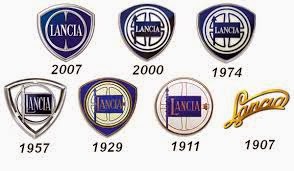
Logo 1907
sâmbătă, 11 iunie 2016
duminică, 5 iunie 2016
RSS AUTOMOBILE - service auto , magazin piese auto IASI
SC RSS AUTOMOBILE SRL
Iasi, Romania
C.U.I. 32717977
J22/141/2014
Magazin 1 – B-dul Alexandru cel Bun, Nr. 4
Telefon: 0729.049.352
E-mail: contact@rss-automobile.ro
Program:
Luni-Vineri: 09:00 - 18:00
Sambata: 09:00-14:00
Duminica: Inchis
Service – Str. Rampei, Nr. 18-20 a, Cartier Dacia
Telefon: 0729.049.351; 0729.049.350; 0232.250.550
E-mail: contact@rss-automobile.ro
Program:
Luni-Vineri: 09:00 - 18:00
Sambata: 09:00-14:00
Duminica: Inchis
LIKE => https://www.facebook.com/rssautomobile.ro/
http://rss-automobile.ro/index.php
Service:
Inaugurata destul de recent, in luna mai 2007, activitatea de service cunoaste o evolutie rapida, sustinuta de seriozitate, profesionalism, experienta in domeniu si nu in ultimul rand, de echipamentele aflate in dotare.
Astazi, ne mandrim cu un service autorizat de R.A.R., pentru marcile VW, AUDI, SEAT, SKODA, DAEWOO, RENAULT, DACIA, FORD si OPEL., lista ce va fi completata cat de curand cu marcile MERCEDES, FIAT si BMW.
RSS utilizeaza scule si dispozitive speciale de la producatori cu renume in domeniu, USAG, PASTORINO, DRAPER, BOSCH, TEHNOTEST, asigurand astfel lucrari promte si de calitate.
Servicii oferite:
Mecanica
Testare compresie
Diagnoza computerizata / osciloscop
Reconditionari cardane
Reconditionari turbosuflante
Quick service
Pentru lucrarile de mica si medie amploare, avem întotdeauna un post de lucru liber. Schimbul de placute, al uleiului si filtrelor, tobelor, elementelor de directie, amortizoarelor, se poate efectua pe loc.
Rapiditatea lucrarilor este asigurata de stocul mare de piese disponibil in magazinele noastre, iar piesele ce nu se afla in stoc se livreaza intr-un timp foarte scurt.
Service rapid, fara programare, 6 zile din 7.
RSS Assist
O noutate in gama serviciilor RSS, asistenta rutiera, ce vine in ajutorul clientilor ce nu se pot deplasa la sediul firmei noastre.
Serviciul include, dupa caz, asistenta mecanica la fata locului, diagnoza computerizata portabila, transportul gratuit al ocupantilor autoturismului pana la service si tractarea autoturismului, daca sunt necesare reparatii suplimentare sau reparatia nu se poate efectua pe loc.
Etichete:
2013,
2014,
2015,
2016,
2017,
Alfa Romeo,
anunturi,
auto,
facebook,
Fiat,
Lancia,
poze,
Romania,
service auto,
site,
stiri
joi, 5 mai 2016
FCA takes part in the 100th edition of the legendary "Targa Florio"
The
Fiat, Alfa Romeo and Abarth brands will take part in the prestigious
100th edition of the great Sicilian classic. Alfa Romeo and Abarth are
main sponsors of "Targa Florio", proof of the special attention FCA pays
to the world of historic cars and the events that enhance the sports
tradition of its brands.
The
100th edition of the legendary "Targa Florio", the oldest car race in
the world, will be held in Sicily 5-8 May. It was originally
commissioned, funded and organised by the Palermo magnate Vincenzo
Florio for the purpose of establishing a "practical and precise
criterion for assessing the travelling car". The race has been competed
in various forms ever since 1906. Organised by AC Palermo in
collaboration with the Automobile Club of Italy, it is four events
rolled up in one: Targa Florio Rally, Targa Florio Historic Rally, Targa
Florio Classic and Targa Florio Historic Speed.
Alfa Romeo
Alfa Romeo has
written some of the most beautiful chapters of its sports history at the
Targa Florio by taking 10 absolute victories, 3 second places, 7 third
places and 10 fastest laps. This extraordinary prize record has been
enriched with two records: that of consecutive victories (6 wins from
1930 to 1935) and that of doubles, with five in all. Added to these are
the many class wins, with the Giulia GTA, Giulietta SZ, Giulia TZ and
TZ2.
The
Alfa Romeo brand is taking part in the Targa Florio Classic, the
historic regularity competition that will pass by characteristic places
in Sicily tied to the famous race, with two gorgeous models coming from
the Alfa Romeo Historic Museum in Arese called "La macchina del tempo".
The 1960 Giulietta SZ (4 cylinders in line, 1290 cc, 100 HP) is a model
belonging to the second series and is distinguished by its so-called
"cut-off tail" (or Kamm tail) that, along with its aerodynamic
efficiency, easily takes it up to the speed of 200 km/h. The 1963 Giulia
Sprint Speciale (4 cylinders in line, 1570 cc, 112 HP) is the
technological evolution of the Giulietta SS, a coupé featuring sinuous
and personal lines that was designed by Scaglione. The Giulia Sprint
Speciale also has an aerodynamic line taken from the aircraft of the day
and developed with direct observation of the flows using wool threads
applied on the bodywork of a car launched at full speed on the
Turin-Milan motorway.
The
four historic cars contending in the Targa Florio Historic Speed race
also come from the Alfa Romeo official collection. This is the dynamic
catwalk down which the drivers and cars that made the Sicilian "cursa"
great paraded, from the stands of Floriopoli to Cerda. The Alfa Romeo 6C
1500 Super Sport of 1928 (6 cylinders in line, compressor, 1487 cc, 76
HP) is the first model of the long-lived six-cylinder dynasty of the
"Jano" era to win Alfa's first of 11 successes at the Mille Miglia with
Giuseppe Campari and to place, with the same driver, absolute second and
first of class at the 1928 Targa Florio. The Alfa Romeo 33/2 "Daytona"
of 1968 (V8, 1995 cc, 270 HP) is a two-litre sports racing prototype
that stole the scene at the endurance races and time trials of the day,
and that clinched the class victory at the 1968 Targa Florio. The 1975
Alfa Romeo 33 TT 12 (12-cylinder boxer engine, 2995 cc, 500 HP) won the
World Championship for Makes in 1975 and also won the Targa Florio
during that magical season with Merzario (the best interpreter of the 33
TT 12) and Vaccarella (a "Targa" icon). The three cars will be driven
respectively by Jochen Mass, Andrea De Adamich and Arturo Merzario,
three "great glories" of international sports motor racing, who have
attained many of their most important successes with Alfa Romeo cars.
Completing the line-up at the Targa Florio Historic Speed competition is
the Alfa Romeo 750 Competizione of 1955 (4 cylinders in line, 1488 cc,
145 HP), a racing spider made in only one complete unit. Its engine came
from the Giulietta and its lines were designed by Boano.
A final great
sports car coming from the Alfa Romeo Historic Museum will stand in the
spotlight at the gala dinner of the event, scheduled for the evening of 5
May at Villa Chiaramonte Bordonaro. It is the RL TF of 1923, the
legendary car with which Ugo Sivocci won the first of 10 Alfa Romeo
victories at the Targa Florio. It was a thrilling race: at the wheel of a
RL model, which was renamed "RL TF" precisely in honour of this
victory, Sivocci covered the 432 km of the Madonìe Circuit (4 laps, 108
km each) at the average speed of 59.04 km/h, which was an amazing speed
for the time, above all considering the dangers and hardships of the
route. As a sign of good omen, the sides of this car had been decorated
with a green four-leaf clover before the race, and this was the
beginning of the history of a legendary symbol for Alfa Romeo. A history
that over 90 years later still continues today with the new Giulia
Quadrifoglio, which depicts the new Alfa Romeo paradigm and that will be exhibited next to the RL TF.
Several prestigious
locations in Palermo will also host dedicated areas exhibiting the
latest Alfa Romeo models during the days of the Targa Florio. They range
from the captivating Giulia Quadrifoglio to the new Giulietta and Mito,
the two recently updated models that display a marked family feeling
with the Giulia, as seen in the new front that flaunts a brand-new grill
and the legendary trefoil, perhaps the most famous and recognisable
signature in the automotive world. Even the lettering of the names “Giulietta” and “Mito” also winks to that of the Giulia, with both cars sporting the refreshed logo of the Alfa Romeo brand.
Abarth
Abarth is also
participating in the prestigious 100th edition as a Main Sponsor. It
boasts a splendid tradition of successes at the Targa Florio speed
competition, including the many class wins achieved with the 1000 SPs -
nimble sport cars that have always found themselves at ease on the
Madonìe roads - and with the 124 Rally vehicles in the latest editions
of the '70s.
Ever since Targa
Florio was transformed from a speed race to a rally, Abarth has taken a
number of absolute wins: two with the Abarth 131 Rally, in 1979 with
Adartico Vudafieri and in 1980 with Mario Pasetti; two with the Fiat
Punto Super 1600, in 2003 and 2004, again driven by Paolo Andreucci, who
also won in 2006 with the Abarth Grande Punto S2000. The same model was
first to pass the finish line in 2009 with Luca Rossetti at the wheel.
The first nine absolute first places are also attributable to Abarth's
work. Altogether, they were won by Lancia Rally, Lancia Delta S4 and
Integrale, cars developed by Abarth engineers.
In line with its
historical identity, Abarth will mark its presence at the Targa Florio
above all in the Rally, which counts toward the Italian Rally
Championship, and in the Historic Rally, valid for the Italian Historic
Car Rally Championship. The races will be opened by three new cars of
the Scorpion brand: Abarth 124, Abarth 595 Competizione and Abarth 695
Biposto.Moreover, an extraordinary Fiat 124 Abarth Rally Gr. 4
(1975) belonging to the company's historic collection will participate
in the start and in the night-time performance trial on Friday, 6 May in
the role of "forerunner of honour". It will be driven for the occasion
by the Verini/Rossetti team, the same that led it to victory in the 1975
European Rally Championship. The Fiat 124 Abarth Rally Gr. 4 will also
take part in the Targa Florio Historic Speed on Sunday, 8 May.
On
the occasion of the event, the public will be able to receive
information on the Abarth Classiche project, register in "The
Scorpionship" community and admire the new Abarth 124 spider in piazza
Verdi. In particular, designed to satisfy even the tastes of the most
difficult-to-please drivers, the new Abarth model is fitted out with
rear-wheel drive, sophisticated suspension and a four-cylinder 1.4
MultiAir Turbo engine with 170 HP, paired with a six-speed manual or
six-speed automatic Sequenziale Sportivo gearbox with steering-wheel
paddle shifters. The first 2,500 units of the exclusive, limited edition
model made by Officine Abarth can be ordered at a price of 40,000 Euro
across Europe. The car will be available in dealerships starting from
September. The new Abarth 124 spider can also be purchased with the FCA
Bank solution by paying 300-Euro monthly instalments.
First launched last
November at the Officine Abarth in Mirafiori in Turin, the Abarth
Classiche project is organised on various levels, from the restoration
atelier to the Abarth Register which coordinates shows, events, rallies
and competitions. As expected, the programme has been a great success,
with numerous certifications already carried out and a long waiting list
of bookings. The coherence between current models and those which set
so many motoring records is one of the secrets of the brand's commercial
success. More information is available on the brand-new website: http://www.abarthclassiche.com.
As for digital resources, “The Scorpionship”,
the only Abarth official community dedicated to owners, collectors,
Abarth club members and fans, opened on March 1. Anyone can register by
filling out the form on the http://scorpionship.abarth.com website. “The Scorpionship” members
will have access to plenty of exciting advantages, promotions and
racing opportunities as well as exclusive invites to meetings for fans.
Finally,
the Abarth 124 spider Rally will be on display at the rally's Park
Fermè in Campofelice di Roccella. The experience of the Abarth Racing
Team paved the way for this concentrate of pure energy and performance
in order to bring the Scorpion back onto the most glorious and demanding
rally courses. Forty years after its last official race, the 1976 Monte
Carlo Rally, the Abarth 124 Rally is back with the same philosophy: to
test road cars' technical solutions under extreme conditions and to
guarantee all Abarth customers excellent performance and maximum
reliability. Its bonnet conceals the direct injection 1800 cm3 twin
cam turbo engine that, thanks to the different selectable mappings,
provides power up to 300 HP at 6500 rpm and an optimum torque curve, a
key element to allow the driver steering and acceleration balance in
drifting. Performance is breathtaking; acceleration is scorching and
marked with full, riveting sound. The project was developed to ensure
reliability and performance also in the extreme conditions typical of
rallies: ice, dirt, dust, water, heat. Even the transmission was
designed to enhance performance: the engine is coupled to a rapid
6-speed sequential gearbox with shift paddles and traction is assured by
the mechanical self-locking differential.
Fiat
The Fiat brand completes the FCA team at this prestigious commemoration event, and will arrive with a 124
Sport Spider (1970) racing in the Targa Florio Classic. Launched in
1966, this evolution of the Fiat 124 saloon in the Spider version was a
sports car that everyone fell in love with at first sight, also because
of its successful design by Pininfarina, and it achieved important class
placings at the late '60s editions of the "cursa". The 124 Spider is
fitted with a five-speed manual gearbox, a 1438 cm3 twin
camshaft engine and disc brakes on all four wheels. Americans were mad
about the proportions and noticeably Italian style of the Fiat 124
Spider, as well as its waterproof soft top that could be lowered
directly from the driver's seat very quickly and simply. Over 200,000
units were produced between 1966 and 1985, and more than three-quarters
of them crossed the Atlantic.
Also joining its memorable "ancestor" is the new Fiat 124 Spider, whose advanced style houses the classic beauty of the historic car without betraying its essence. A tribute to the iconic car whose name it carries, the new Fiat 124 Spider follows the tradition of its famous ancestor and brings its classic styling and performance to a new generation. The new Fiat Spider is equipped with the reliable 1.4-litre turbo four-cylinder engine with MultiAir technology, which delivers 140 HP and 240 Nm of torque, and is available with a six-speed manual transmission.
Lastly,
two new Doblòs of the Fiat Professional brand are making their débuts
at the Targa Florio in the mobile workshop version. They are
accompanying the FCA Heritage collection cars during events in various
countries. This quality support will be offered to the new structure
throughout 2016. It was set up with the job of coordinating all of the
company's actions in the world of historic motor racing. The term
'Heritage' was selected precisely because of its dual meaning of
"heritage" and "inheritance", as it symbolises the value of a history
that is not only an asset of the company, but is also a historic and
cultural keepsake of the entire country.
Turin, 4 May 2016
joi, 21 aprilie 2016
Jeep® Renegade and Jeep Wrangler are “Cars of the Year” according to Auto Bild allrad
- Jeep® Renegade named best "Off-road vehicle and SUV up to €30,000"
- Jeep Wrangler is the winner in the category "Off-road vehicles and SUVs from €30,000 - €50,000"
- Second top placing in a row for the Renegade since 2015
For the second consecutive year, the expert readers of the German SUV and 4×4 specialist magazine "Auto Bild allrad" selected the Jeep® Renegade as their favourite car in the import class of "Off-road vehicles and SUVs up to €30,000". A very important recognition that demostrates that the first Jeep compact SUV, and latest addition to the Jeep family, comes immediately to mind of the German reader.
The Auto Bild allrad readers also chose Jeep Wrangler, the icon of the number one SUV brand, as the winner in the import class of the "Off-road vehicles and SUVs from €30,000 - €50,000" category.
Auto Bild allrad is one of the leading magazines for 4x4 enthusiasts on and off the road in Europe. First published in 2002, it has a monthly circulation of almost 70,000 copies and 260,000 readers.
In addition to the two prestigous awards, the Auto Bild allrad readers awarded both the Wrangler and the Renegade the second place in the respective overall classes incuding all German national brands, further confirming the strong appreciation of the German public for the Jeep icon and its top selling model.
A total of 170 models split into 10 categories participated in the contest. The readers' vote proved that both the Jeep Renegade and the Jeep Wrangler can boast unsurpassed on and off road performance.
Jeep Renegade was introduced in September 2014 throughout the EMEA region (Europe, Middle East, Africa) where it is available with a full-range comprising four different trim levels - Sport, Longitude, Limited and Trailhawk - and a choice of efficient turbo diesel and petrol engines combined with four-wheel drive or front wheel-drive configurations.
Jeep Renegade is the top-selling model of the Jeep range and the main driver of Jeep commercial success in the region. Its record-setting pace is confirmed in the first quarter of 2016 where, with 19,159 units sold in Europe, Renegade recorded a 51.25% growth compared with the same period in 2015. Through March, Renegade also achieved its best ever quarter in Europe as well as in several markets such as Italy, the UK, France, Spain and Austria.
The list of awards gained by the Jeep compact SUV in EMEA since its launch includes:
|
"New Car of the Year 2015" |
- Quattroruote (Italy); |
|
"Best SUV of the Year 2015" |
- Coches.net (Spain); |
|
"Car of the Year 2016" |
- Autoesporte (Brazil); |
|
"4x4 of the Year 2015" |
- 4x4 Magazine (France); |
|
"SUV of the Year 2015" |
- 4x4 Tout-Terrain Magazine (France); |
|
"Car of the Year 2016" awarded by a panel of specialist journalists in Greece; |
|
|
"Best Buy Award 2016" in the Subcompact-SUV category for US Consumer Guide Automotive Best Buy; |
|
|
"4x4 of the Year 2016" |
- 4x4 Magazine (UK); |
|
"Car of the Year" and "SUV of the Year" |
- Motor24 (Estonia); |
|
"Best Crossover Basta!" |
- BilMagasinet (Denmark); |
|
"Offroad Vehicle of the Year 2015" category subcompact SUV |
- OFF ROAD (Germany) |
Turin, 20th April 2016
miercuri, 13 aprilie 2016
Nasce Ypsilon Mya. Lancia si veste di fascino e novità
The Successful Partnership Between the Jeep® and Harley-Davidson® Brands Continues in 2016
- The two brands will be joining forces for the third consecutive year.
- The entire line-up of the most awarded SUV range ever available for test drives.
- The official HOG and JOG clubs' members to be Ambassadors and stars of the events.
- The EMEA tour activities can be followed on all Jeep social channels.
For the third year running, the Jeep® brand will be the official partner of Harley-Davidson®
and will attend the main events organized by the legendary motorcycling
brand in the EMEA region. The prestigious collaboration is based on the
authentic shared values of passion, freedom and team spirit.
The partnership between the two American icons has been renewed for 2016 in the wake of the success of the past two editions, which attracted more than 600,000 participants in 2014 and over one million in 2015. From end April to September, the program is packed and consists of 13 events in eight European countries (e.g. France, Germany, Netherlands , Austria, UK, Italy, Slovenia and the Czech Republic) plus one event in South Africa. The first gathering will be at the Euro Festival, from April 28th to May 1st, on the Gulf of Saint-Tropez at the same time as the event in South Africa.
The Harley Village, set up for each event, will host the Jeep stand where the public will be able to discover and test drive the full Jeep SUV line-up beside a selection of Jeep showcars customized with exclusive Mopar accessories.
The JOG (Jeep Owners Group) and the HOG (Harley Owners Group) will be stars of the various European gatherings. Launched in August 2014, JOG is 'the one and only' official fan club run centrally by the Jeep brand, and it is active in 24 countries across the EMEA region with 64,000 members. HOG was born in 1983, and it counts a total of 116,000 members in the EMEA region.
The two official clubs gather owners and enthusiasts who share common values: the pride of driving an icon, the longing for freedom and the desire for adventure. But affinities do not end there. The members of both clubs share the passion for travel and adventure, and transfer their own personalities to the vehicles they drive, in terms of loyalty and customization. Not by chance, Jeep drivers and Harley-Davidson riders feel that they belong to a great community.
Follow Jeep EMEA news and video on:
Brand blog: www.jeep-people.com
Facebook: www.facebook.com/JeepOlllllllOpeople
Instagram: www.instagram.com/jeeppeople/
Twitter: www.twitter.com/Jeep_People
YouTube: www.youtube.com/JeepOlllllllOPeople
Turin, 11 April 2016
joi, 7 aprilie 2016
Alfa Romeo and Abarth Triumph at the “Motor Klassik Awards 2016”
The
readers of the German magazine "Motor Klassik" have crowned the
brand-new Alfa Romeo Giulia as "Future Classic" in the "mid-size"
category and Abarth 595 in the "small" category, the latter for the
second year running. Alfa Romeo 4C was the winner in the "coupé" class
for the third time in a row. The title of "Classic Car of the Year" went
to the rare 1930s Alfa Romeo 8C 2900B Touring luxury sports car.
The award ceremony of the "Motor Klassik 2016" competition organised by the German specialised motoring magazine with a readership of over 22,000 experts, most of whom are classic car owners, took place at the Dyck medieval castle, a short distance away from Düsseldorf, yesterday evening.
The survey, divided by
model category, aimed at identifying what current cars have the
potential of becoming timeless icons - or "Future Classics", in their
words. The accolade is an important indicator of the collectable car
trends of tomorrow.
This year's champions were Alfa Romeo and Abarth and their winning models confirm the everlasting allure of Italian design and racing-inspired technology. This is what the readers of the German magazine thought by electing the new Alfa Romeo Giulia as "Future Classic" in the "mid-size" category and Alfa Romeo 4C in the "coupé" class, the latter for the third time in a row. Abarth 595 successfully reconfirmed the title won last year in the "small" category. Alfa Romeo also earned a "Classic Car of the Year" title with the 8C 2900B Touring, an extremely rare 1930s sports car and arguably one of Alfa Romeo's most beautiful cars ever.
Some eighty years separate the Alfa Romeo 8C 2900B from today's Alfa Romeo 4C and Alfa Romeo Giulia but the models still have some crucial features in common. For instance, all three transfer the best technology developed for racing to the road. The chassis and the eight-cylinder engine of the Alfa Romeo 8C 2900B, in particular, derived from the successful versions used in competitions. Similarly, the modern Alfa Romeo 4C and Alfa Romeo Giulia have components originally developed for Formula 1.
An example is the carbon fibre (monocoque) cockpit which, together with the ample use of aluminium and special composite materials, allows the Alfa Romeo 4C to achieve an empty weight of just 895 kilograms and a weight-to-power ratio of less than 4 kilograms: a record even for a supercar.
Furthermore, the engine of Alfa Romeo 4C is a four-cylinder direct injection turbo with a displacement of 1750 cubic centimetres that delivers 240 HP.
The new 2.9-litre petrol
BiTurbo engine developed for Alfa Romeo Giulia Quadrifoglio is the
ultimate expression of the "meccanica delle emozioni" concept. Inspired
by Ferrari technologies and engineering skills, the engine is entirely
made of aluminium and delivers 510 HP of power and over 600 Nm of
torque. Performance is exhilarating: top speed of 307 km/h and
acceleration from 0 to 100 km/h in only 3.9 seconds. The generous use of
ultra-light materials (such as carbon fibre, aluminium and aluminium
composite and plastic material) and the adoption of exclusive features,
such as the Active Aero Splitter which actively manages downforce at
fast speed, are also taken from the world of racing.
Abarth 595 also has racing car DNA. The name itself is homage to one of the most successful racing cars of the 1960s which contributed to the fame of car tuner and maker Carlo Abarth. The classic Abarth 595 reaped win and after win with its (modest to today's standards) 32 HP engine, while its modern counterpart unleashes up to five times more power for an exhilarating driving experience. Available in sedan or convertible, the Abarth 595 range features three trim levels ("Elaborabile," "Turismo," and "Competizione"), three power levels of the 1.4-litre T-jet engine (140 HP, 160 HP, and 180 HP) and two transmissions (five-speed manual or robotised sequential). Abarth 695 Biposto, known as the "smallest supercar," completes the line-up. Delivering 190 HP, the car secures the thrills and technology of a real racing car on everyday roads.
The third title for Alfa Romeo 4C, the second success for Abarth 595 and the first victory of Alfa Romeo Giulia add to the FCA prize record placing the brand at the top of the "Motor Klassik Awards" ranking. Titles won in the past include those of Alfa Romeo 159 and Alfa Romeo 8C Competizione in 2009, and those taken by Fiat 500 in 2012 and 2013. Worth remembering is the 1930s Alfa Romeo 6C 1750 named "Classic Car of the Year" by the readers of "Klassik Awards" in 2012.
Turin, 6 April 2016
FCA Star of the “2016 Techno Classica” Motor Show in Essen
From
6 to 10 April the German town will host the prestigious event dedicated
to vintage vehicles. Among the participants is FCA - with its Alfa
Romeo, Abarth and Fiat brands which will be parading a number of
precious historic models alongside the latest new releases.
Launch of the 28th edition
of "Techno Classica" hosted in Gruga Hallen (Essen) and ready to
welcome fans and exhibitors from around the world. FCA will attend the
event, confirming its interest in this sector pervading contemporary
society and enjoying continuous growth, which adds value to the modern
automotive sector. In particular, the public can admire several
historical models of the Alfa Romeo, Fiat and Abarth brands together
with the latest current production models. It is the best way to
strongly reiterate the uniqueness of each brand in the international
arena, a heritage of cars and designers, races and engines, style and
innovation that have marked technological progress and the sporting
events of the twentieth century.
Alfa Romeo
Alfa Romeo's collection focuses on its sports saloons, a concept that
the Italian brand itself invented and which has now been updated and
upgraded with the new Giulia. Visitors to the Essen show can see four
precious models from the Alfa Romeo Museum in Arese called "La macchina
del tempo": the 1900 (1950), the Giulia TI Super (1963), the 75 Turbo
Evoluzione (1987) and the 156 D2 "SuperTurismo" (1998). Alongside these
rarities is a captivating Giulia Quadrifoglio, the quintessence of the
new Alfa Romeo style and the ultimate expression of the "meccanica delle
emozioni" concept.The sports saloon concept originated back in 1950 with the 1900 (L4, 1884 cc, 80 HP) which opened the way to a new era for the brand. Alfa Romeo's first car built entirely on a production line, it was also the first to be designed according to industrial criteria, including the monocoque, and the first with a four-cylinder engine developed for mass production. The most significant features of the 1900 are its dynamic performance characteristics. Speed, road holding, handling and active safety made this model the first high-performance three-box saloon (it was also highly appreciated by private drivers).
In 1963, the Alfa Romeo Giulia TI Super further developed the concept of "sports saloon". Built in 501 units, it is the ready-to-race version of the Giulia, with the 4-cylinder 1.6 litre engine increased to 112 HP lightened by a hundred or so kilos and with a top speed of 190 km/h. Another star of the German show will be the 1987 Alfa Romeo 75 Turbo Evolution (L4, 1762 cc, 155 HP, turbo) that, similarly to what happened 24 years before with the Giulia TI Super, was produced in a limited edition of 500 units specifically made for type approval in "Group A" of the Touring Car category. The rules of touring cars changed a decade later. Since 1998, Alfa Romeo has raced the so-called Class 2 version of the 156 model (L4, 1995 cc, 310 HP). And so, tradition continues. Like the 1900, the Giulia and the 75, the 156 confirmed the winning concept of "sports saloon" that we find today in the brand-new Giulia.
Finally, two vintage models will be on display at "Techno Classica" in Essen: the Alfa Romeo 1600 Spider "Duetto" and the Giulia Sprint GTA, which will celebrate the 50th anniversary of two important events in the brand's history. In fact, in 1966 the Alfa Romeo Spider, the famous "Duetto", made its début. It was the renowned two-seater driven by Dustin Hoffman in the cult movie "The Graduate". And in that same year Alfa Romeo won the European Touring Car Championship for the first time with the Giulia Sprint GTA, and clinched a repeat victory the following year. The GTA soon became the undisputed queen of touring racing. In addition, also in 1966 it set another record: it was the first touring car to complete the Nürburgring circuit in less than 10 minutes. With De Adamich-Zeccoli, the Autodelta coupé finished the Nordschleife in 9'59".
Fiat
Another brand making a
comeback to the "Techno Classica" is Fiat, which is presenting an icon
of the '60s to the general public: the Fiat 124 Sport Spider. Launched
in 1966, the model on display dates to 1969 and retains all of its
original charm still today. Developed from the Fiat 124 saloon, the
Spider version was a sports car that very soon everyone fell in love
with, also because of Pininfarina's design. Pininfarina is a historic
partner of the Italian car maker and a prominent name in the automotive
sector. The 124 Spider was fitted with a five-speed manual gearbox, a
1438 cm3 twin camshaft engine and disc brakes on all four wheels.
Americans were mad about the proportions and noticeably Italian style of the Fiat 124 Spider, as well as its waterproof soft top that could be lowered directly from the driver's seat very quickly and simply. Over 200,000 units were produced between 1966 and 1985, and more than three-quarters of them crossed the Atlantic.
The new Fiat 124 Spider will also be on stand at "Techno Classica". Its advanced style houses the classic beauty of its ancestor without betraying its essence. A tribute to the iconic car launched 50 years ago and whose name it carries, the new Fiat 124 Spider follows the tradition of its legendary ancestor and brings its classic styling and performance to a new generation. The new Fiat Spider is equipped with the reliable 1.4-litre turbo four-cylinder engine with MultiAir technology, which delivers 140 HP and 240 Nm of torque, and is available with a six-speed manual transmission.
Americans were mad about the proportions and noticeably Italian style of the Fiat 124 Spider, as well as its waterproof soft top that could be lowered directly from the driver's seat very quickly and simply. Over 200,000 units were produced between 1966 and 1985, and more than three-quarters of them crossed the Atlantic.
The new Fiat 124 Spider will also be on stand at "Techno Classica". Its advanced style houses the classic beauty of its ancestor without betraying its essence. A tribute to the iconic car launched 50 years ago and whose name it carries, the new Fiat 124 Spider follows the tradition of its legendary ancestor and brings its classic styling and performance to a new generation. The new Fiat Spider is equipped with the reliable 1.4-litre turbo four-cylinder engine with MultiAir technology, which delivers 140 HP and 240 Nm of torque, and is available with a six-speed manual transmission.
Abarth
Completing the line-up at
the "2016 Techno Classica" is the Scorpion brand, Abarth. It is
presenting a historic Fiat Abarth 124 in the road version and the new
Abarth 124 spider, which is making its official début in Germany
precisely in Essen.
Designed to satisfy even the most demanding drivers, the car can already be ordered anywhere in Europe for Euro 40,000 and will be available in dealerships starting from September. The new Abarth 124 spider can also be purchased with the FCA Bank solution by paying 300-Euro monthly instalments.
The new Abarth 124 spider is fitted with rear-wheel drive, sophisticated suspension and a four-cylinder 1.4 MultiAir Turbo engine with 170 HP, paired with a six-speed manual or six-speed automatic Sequenziale Sportivo gearbox with steering-wheel paddle shifters.
The fusion between historic heritage and the hunger for continuous technical progress is part of the Scorpion brand's DNA, as also demonstrated by the cars showcased in Essen and by the ambitious "Abarth Classiche" initiative. This project, first launched last November at the Officine Abarth in Mirafiori in Turin, is organised on various levels, from the restoration atelier to the Abarth Register which coordinates shows, events, rallies and competitions. As expected, the programme has been a great success, with numerous certifications already carried out and a long waiting list of bookings. The coherence between current models and those which set so many motoring records is one of the secrets of the brand's commercial success. More information is available on the brand-new website: http://www.abarthclassiche.com. As for digital resources, "The Scorpionship", the only Abarth official community dedicated to owners, collectors, Abarth club members and fans, opened on March 1. Anyone can register by filling out the form on the http://scorpionship.abarth.com website. "The Scorpionship" members will have access to plenty of exciting advantages, promotions and racing opportunities as well as exclusive invites to meetings for fans.
Designed to satisfy even the most demanding drivers, the car can already be ordered anywhere in Europe for Euro 40,000 and will be available in dealerships starting from September. The new Abarth 124 spider can also be purchased with the FCA Bank solution by paying 300-Euro monthly instalments.
The new Abarth 124 spider is fitted with rear-wheel drive, sophisticated suspension and a four-cylinder 1.4 MultiAir Turbo engine with 170 HP, paired with a six-speed manual or six-speed automatic Sequenziale Sportivo gearbox with steering-wheel paddle shifters.
The fusion between historic heritage and the hunger for continuous technical progress is part of the Scorpion brand's DNA, as also demonstrated by the cars showcased in Essen and by the ambitious "Abarth Classiche" initiative. This project, first launched last November at the Officine Abarth in Mirafiori in Turin, is organised on various levels, from the restoration atelier to the Abarth Register which coordinates shows, events, rallies and competitions. As expected, the programme has been a great success, with numerous certifications already carried out and a long waiting list of bookings. The coherence between current models and those which set so many motoring records is one of the secrets of the brand's commercial success. More information is available on the brand-new website: http://www.abarthclassiche.com. As for digital resources, "The Scorpionship", the only Abarth official community dedicated to owners, collectors, Abarth club members and fans, opened on March 1. Anyone can register by filling out the form on the http://scorpionship.abarth.com website. "The Scorpionship" members will have access to plenty of exciting advantages, promotions and racing opportunities as well as exclusive invites to meetings for fans.
Turin, 5 April 2016
vineri, 25 martie 2016
The Fiat Professional Range's Got Talent Aplenty
For
the new vehicle, Fiat Professional has chosen a name in tune with
tradition that by making reference to an ancient coin evokes the concept
of value and combines top-in-class loading capacity with extraordinary
compactness and agility. This makes the Fiat Professional line-up even
more competitive in terms of range and number of solutions. Orders will
kick off in May.
Fiat Professional
introduces Talento, the model that with its generous loading capacity is
the ideal work mate for professionals in city streets and on major
roads alike. Its features include great versatility and the ability to
adapt to the most diverse needs of customers. Its name - Talento -
evokes the innate qualities of the vehicle and the concept of value by
making reference to the name of an ancient coin as in the best Fiat
Professional tradition. The moniker has high symbolic value and suggests
what the vehicle can do, its abilities and - in short - its talent. All
its features are crucial for taking on the new challenges of the
future.
From the style standpoint,
the new Talento is compact and well-proportioned: the forward
stretching windscreen pleasantly connects to the short bonnet and the
overall effect is one of an imposing but dynamic front end. The design
is horizontal with bold, clear-cut lines in tune with the new family
feeling of the Fiat Professional range and enhances the width of the
vehicle and its loading capacity, clearly suggested by the square-shaped
rear end, while conveying an idea of dynamism and stability. The new
model is equipped with reliable, powerful and cost-effective turbo and
twin turbo diesel engines delivering powers up to 145 HP.
The new Talento line-up is the link between Doblò Cargo and Ducato, and allows Fiat Professional to cover new volumes and loading lengths and provide comprehensive, satisfactory answers to all professional transportation needs.
The result is a functional
vehicle that maximises the value of work, time and money by focusing on
real customer needs with a full range of versions featuring vans,
people-carriers, crew cabs and flat beds.
Talento - with its transparent, complete line-up - and Fiat Professional - with its comprehensive ranges and organisation dedicated to professionals - have all the answers for customers seeking ever more specific solutions.
Turin, 24 March 2016
marți, 15 martie 2016
FCA at Milan AutoClassica 2016
The
2016 edition of the Milano AutoClassica classic car show will be held
at Fiera Milano Rho from 18 to 20 March. Among the participants are FCA
with its Alfa Romeo, Abarth and Fiat brands, which will be displaying a
number of precious historic models alongside the latest new releases in
Hall 12.
The doors have opened on the
prestigious Milano AutoClassica classic car show, where the Alfa Romeo,
Abarth and Fiat brands take centre stage.
Alfa Romeo's collection focuses
on its sports saloons, a concept that the Italian brand itself invented
and which has now been updated and upgraded with the new Giulia.
Visitors to the Milan show can see four precious models from the Alfa
Romeo Museum in Arese, named "La macchina del tempo": the 1900 (1950),
the Giulia TI Super (1963), the Alfetta (1972) and the 75 Turbo
Evoluzione IMSA (1988). Alongside these rarities is an extraordinary
Giulia Quadrifoglio, the quintessence of the new Alfa Romeo style and
the ultimate expression of "meccanica delle emozioni".
All eyes are also on the Abarth
brand, which will showcase two 124 models: a historic 1975 road version
and the fascinating new spider-making its debut in Italy following its
recent unveiling at the Geneva Motor Show-which is destined to become an
icon of driving pleasure. Designed to satisfy even the most
difficult-to-please drivers and available to order throughout Europe at
the price of 40,000 euros, the brand-new Abarth 124 spider is a new myth
in the making thanks to its performance and characteristic feel. It
offers rear-wheel drive, sophisticated suspension and a four-cylinder
1.4 MultiAir Turbo engine with 170 HP, paired with a six-speed manual or
six-speed automatic Sequenziale Sportivo gearbox with steering-wheel
paddle shifters. The fusion between historic heritage and the hunger for
continuous technical progress is part of the Scorpion brand's DNA, as
also demonstrated by the cars showcased, and by the ambitious Abarth
Classiche initiative. This project, first launched last November at the
Officine Abarth in Mirafiori in Turin, is organised on various levels,
from the restoration atelier to the Abarth Register which coordinates
shows, events, rallies and competitions.
As expected, the programme has been a great success, with numerous certifications already carried out and a long waiting list of bookings. The coherence between current models and those which set so many motoring records is one of the secrets of the brand's commercial success. More information is available on the new website: http://www.abarthclassiche.com.
As for digital resources, "The Scorpionship", the only Abarth official community dedicated to owners, collectors, Abarth club members and fans, opens on 1 March. Anyone can register by filling in the form on the http://scorpionship.abarth.com website.
"The Scorpionship" members will have access to plenty of exciting advantages, promotions and racing opportunities as well as exclusive invites to meetings for fans.
As expected, the programme has been a great success, with numerous certifications already carried out and a long waiting list of bookings. The coherence between current models and those which set so many motoring records is one of the secrets of the brand's commercial success. More information is available on the new website: http://www.abarthclassiche.com.
As for digital resources, "The Scorpionship", the only Abarth official community dedicated to owners, collectors, Abarth club members and fans, opens on 1 March. Anyone can register by filling in the form on the http://scorpionship.abarth.com website.
"The Scorpionship" members will have access to plenty of exciting advantages, promotions and racing opportunities as well as exclusive invites to meetings for fans.
Returning to the Milan show, the FCA line-up is completed by the new Fiat 124 Spider, which revives the storied nameplate, bringing its classic styling and performance to a new generation. Paying homage to its namesake, the original 124 Spider that was launched nearly 50 years ago, the new Fiat 124 Spider encompasses the classic beauty of its predecessor in a new perspective, without betraying its very essence. The new Fiat Spider is equipped with the reliable 1.4-litre turbo four-cylinder engine with MultiAir technology, which delivers 140 HP and 240 Nm of torque, and is available with a six-speed manual transmission.
Finally, in the outdoor area of the Milan show, visitors will be able to take a close look at the Alfa Romeo 4C Spider and the Abarth 695 Biposto, which they can also test drive in addition to the new Alfa Romeo Giulietta and the multi award-winning Alfa Romeo 4C.
Below is a description of the historic models in the Alfa Romeo collection exhibited at the event.
1900 (1950)
The sports saloon concept
originated back in 1950 with the 1900. Alfa Romeo's first car built
entirely on a production line, it was also the first to be designed
according to industrial criteria, including the monocoque, and the first
with a four-cylinder engine developed for mass production.
The most significant features of the 1900 are its dynamic performance characteristics. Speed, road holding, handling and active safety made this model the first high-performance three-box saloon, features that had previously been reserved for true sports cars (in the bodywork configuration) and higher segment models. Pure sports performance in a family car was an innovative proposal at that time, in a market that was heading towards major expansion. The 1900 collected numerous racing victories, including a coveted first place in its category at the Mexican Carrera Panamericana in 1954, hence the car's famous advertising tag line: "The family saloon that wins races". In the mid-1950s, it became the first "Panther" Flying Squad car of the Italian State Police, which was modernising its fleet with high-performance vehicles to lead the fight against crime. In fact, all subsequent Alfa Romeo saloons were used as police cars.
The 1900's four-cylinder, twin-cam engine was continually upgraded, reaching 115 HP with a top speed of 180 km/h, which was unprecedented for a family car.
The 1900 was retired from production in 1959 after 17,390 units had rolled off the assembly line at the company's plant in Portello.
The most significant features of the 1900 are its dynamic performance characteristics. Speed, road holding, handling and active safety made this model the first high-performance three-box saloon, features that had previously been reserved for true sports cars (in the bodywork configuration) and higher segment models. Pure sports performance in a family car was an innovative proposal at that time, in a market that was heading towards major expansion. The 1900 collected numerous racing victories, including a coveted first place in its category at the Mexican Carrera Panamericana in 1954, hence the car's famous advertising tag line: "The family saloon that wins races". In the mid-1950s, it became the first "Panther" Flying Squad car of the Italian State Police, which was modernising its fleet with high-performance vehicles to lead the fight against crime. In fact, all subsequent Alfa Romeo saloons were used as police cars.
The 1900's four-cylinder, twin-cam engine was continually upgraded, reaching 115 HP with a top speed of 180 km/h, which was unprecedented for a family car.
The 1900 was retired from production in 1959 after 17,390 units had rolled off the assembly line at the company's plant in Portello.
Giulia TI Super (1963)
The revolutionary and groundbreaking Giulia saloon debuted in 1962. The advertising claim "designed by the wind" was inspired by the Giulia's outstanding drag coefficient of 0.34, which would still be competitive on today's market. This sports saloon became the backbone of Alfa Romeo's line-up, as well as a production link between the company's Portello and Arese plants.
The Giulia was the first mass-produced car with a five-speed transmission and one of the first with a differentiated body structure: in the event of a collision, the passenger compartment held its shape, ensuring greater passenger safety. The Giulia's 1600 four-cylinder engine differed from the Millenove in terms of displacement and construction materials. It had a crankcase made of aluminium rather than cast iron, was essentially derived from the Giulia "milletrè" (launched in 1954) and was an extremely sophisticated and high-performance engine with long durability. The exceptional dynamics and design features of the Giulia, in its various guises, garnered incredible results in races. The Giulia TI Super, launched in 1963 (112 HP and 190 km/h), is the rarest and most prestigious Giulia variant. Only 501 of this ready-to-race version were produced, almost all of them in Biancospino White, with the Quadrifoglio cloverleaf emblem on the side panels and boot and with the bodywork streamlined to further improve its already excellent performance. The TI Super nurtured a generation of racing drivers who eventually graduated to higher formulas, having put themselves in the spotlight with victories and rankings achieved behind the wheel of the Alfa Romeo saloon. The Giulia TI Super is particularly suited to road races, as it proved by memorably winning its category in the 1963 Tour de France Auto, one of its greatest successes. Over a million units had been built by the time the Giulia series reached the end of its long production run.
Alfetta (1972)
Alfa Romeo's prestigious sports saloon, the Alfetta, made its international debut in May 1972 in Trieste, presented by five-time F1 World Champion Juan Manuel Fangio. The all-new car was a cross between the 1750 and 2000, both of which were based on the Giulia and would be gradually replaced by the new arrival. The Alfetta was technically state of the art, a further evolutionary step in the interpretation of the sports saloon concept, which had originated twenty years earlier with the 1900. At the time of its launch, the Alfetta was the most sophisticated mass-produced saloon on the market. It had a longitudinal front engine (1779 cc, 122 HP, 180 km/h), a rear-mounted transaxle transmission and clutch system plus De Dion rear suspension, a technical solution derived from the 159 Formula 1 Alfetta, which incorporated a De Dion axle and was driven to victory in the 1951 World Championship by Juan Manuel Fangio.
The launch campaign played up this historical pedigree with images depicting the Alfetta saloon in front of its namesake F1 predecessor. The Alfetta was a success right from the first few months of its long production run (which lasted until 1984 in various versions and displacements), occupying a 40% segment of the market. In the 1980s, the Alfetta was the first car to adopt variable valve timing, a key technology internationally patented by Alfa Romeo and which is still included in engine designs. In addition to its undeniable dynamic qualities, the Alfetta provided comfort, liveability and a modern upgrade of the high-performance saloon concept. In total, 476,000 Alfetta vehicles were built before the model was taken out of production in 1984.
Alfa 75 Turbo Evoluzione IMSA (1988)
In 1985, Alfa Romeo marked its
75th anniversary by unveiling the Alpha 75: a compact sports saloon that
replaced the New Giulietta (1977-1984) and expanded the range of
powerplants to include a 2.5-litre V6 engine, which was subsequently
further enlarged to 3 litres. The 75 shared its bodywork and many
mechanical components with the New Giulietta, which in turn was based on
the Alfetta. The result was a successful carryover with a very personal
and distinctive design incorporating two major innovations: the 2-litre
Twin Spark engine (1962 cc, 148 HP, 205 km/h) and the debut of a turbo
production engine (1779 cc, 155 HP, 215 km/h), the first to adopt an
advanced electric supercharging control system. In 1988 an Evoluzione
version of the 75 Turbo was developed according to IMSA (International
Motor Sports Association) specifications and subsequently won two
editions of the Giro Automobilistico d'Italia, in 1988 and 1989. In this
configuration, the 75 reached a power of 335 HP in 1988 and 400 HP the
following year. It was also distinguished by a wide-track body and
refined aerodynamics, with a striking rear spoiler in carbon fibre.
Retired from production in 1992 after selling 387,000 units-including in the United States, where it was proudly renamed the Milano-the 75 was the last car in the outstanding and long-lived Alfetta series.
Turin, 15 March 2016
Etichete:
2016,
Abarth,
Alfa Romeo,
auto,
europa,
Fiat,
Fiat Chrysler Automobiles,
internet,
istorie,
logo,
masini,
poze,
presa,
salon auto,
site,
stiri
Abonați-vă la:
Postări (Atom)